
Austin & Larson Tax Resolution
Tax Lawyer In Howell Township, MI
Settle IRS and State Tax Debt Today!
Tax Debt is Often
Intimidating
Frustrating
Confusing
Embarrassing
Stressful
… But it Doesn’t Have to Be
Austin & Larson Tax Resolution helps Howell Township residents and business owners settle tax debt with the IRS and the State of Michigan. Our team of IRS Enrolled Agents, CPAs, and tax attorneys runs cases from our Brighton office on West Grand River Avenue, about a 20-minute drive east of the township. The first consultation is free. Most people who call are facing one of three things: a balance they cannot pay, a notice they do not understand, or a property assessment that looks too high.
What We Do | Tax Resolution

Offer In Compromise

Installment Agreements

Non-Collectable Status

Compliance

Revenue Officer Representation

Levies & Wage Garnishments

Bankruptcy

Audit Representation

Tax Return Preparation
Handling tax resolution may feel daunting, but with our expert guidance, you'll experience relief knowing seasoned professionals are by your side. At Austin & Larson Tax Resolution, our experienced Michigan tax lawyers are dedicated to delivering the reassurance and help you deserve. Well-regarded for their expertise and in-depth understanding of Michigan State tax regulations, our proficient tax relief lawyers provide a full spectrum of services, from thorough consultations to exceptional legal advocacy, all focused on securing the most favorable resolution to your tax matters.
Start With the Notice in Front of You
The notice number and response deadline often determine the first step.
A balance-due notice may allow time to review the account and request a payment arrangement. A final levy notice, wage garnishment, bank levy, or direct contact from an IRS Revenue Officer requires faster attention. Michigan Treasury notices follow their own protest and collection procedures, so a federal solution does not automatically resolve a state balance.
Keep the complete notice, including every page and envelope. Do not rely only on the amount shown at the top. The tax period, notice date, appeal language, and deadline can be more important than the headline balance.

Federal and Michigan Tax Resolution Are Separate
A taxpayer may owe the IRS, the Michigan Department of Treasury, or both. Each agency has its own account records, collection procedures, forms, and approval process.
Michigan offers several resolution paths, including installment agreements, Offers in Compromise, and temporary hardship relief through Currently Not Collectible status. A federal Offer in Compromise may support a related Michigan request in some circumstances, but it does not automatically eliminate or settle a Michigan balance.
When both agencies are involved, the plan should account for both obligations so that resolving one balance does not create a new compliance problem with the other.
Livingston County Property Tax Foreclosure Uses the State Process
Local property-tax delinquency is different from IRS or Michigan income-tax debt. In Livingston County, the State of Michigan is the Foreclosing Governmental Unit. The Livingston County Treasurer handles the delinquent account before foreclosure, but the foreclosure and sale process ultimately runs through the State.
The county’s published timeline follows these stages:
| Stage | What Happens |
| March 1, first year of delinquency | Unpaid local property taxes transfer to the Livingston County Treasurer. |
| March 1, second year | The property enters forfeiture. Forfeiture is not yet foreclosure. |
| March 1, third year | The Circuit Court enters a judgment of foreclosure. |
| March 31 | Final deadline to pay before title transfers. |
| April 1 | Clear title passes to the State of Michigan. |
| July | The State conducts the public auction. |
If a foreclosed property sells for more than the delinquent taxes and related charges, an excess-sales-proceeds claim is filed with the Michigan Department of Treasury’s Community Services Division rather than the county. These claims have strict procedures and deadlines.
This section is general information about the local process. Anyone already in forfeiture or foreclosure should confirm the current deadline shown on the official notice immediately.
Looking For A Fresh Start in Michigan?
We Are Here To Help!
Should the weight of tax debt be pressing down on you, we urge you to connect with us to avail of a no-cost
consultation. Our objective revolves around untangling tax debt complexities for clients entangled in an array of
tax-related dilemmas. It would bring us immense satisfaction to furnish you with solutions to your inquiries and aid
you in swiftly settling your tax debt matters.
When Professional Tax Representation May Help
Representation may be useful when:
- An IRS Revenue Officer has contacted you
- You received a final notice of intent to levy
- A wage garnishment or bank levy has started
- Several years of returns are unfiled
- The balance involves business or payroll taxes
- You are facing an IRS or Michigan audit
- You owe both federal and Michigan taxes
- A previous payment agreement defaulted
- You are considering an Offer in Compromise
- Your financial hardship requires a detailed collection statement
Some straightforward matters may be handled without a tax-resolution firm. A taxpayer who is fully filed and qualifies for a simple online payment plan may be able to apply directly through an IRS online account. A routine request for missing information may also be resolved by supplying the requested documents.
The purpose of the initial review is to identify whether representation is necessary and which resolution path fits the facts.
Our Process | Simple, Fast & Stress Free
Step 1: Initial Contact
During your first call to our office, we will ask you a brief
background of your current tax situation and determine the
most convenient office location for your free initial
consultation.
Step 2: Free Consultation
We will meet with you to review and discuss your individual
facts and circumstances to create a customized tax relief plan
for your situation and the next steps to take to resolve your tax
situation.
Step 3: Begin Resolving Debt
Once we have decided to move forward, we will immediately begin working with the IRS on your behalf to resolve your
case as quickly as possible. We will also provide advice and the steps you need to take to ensure you do not acquire
any additional debt while we work to settle your case. From the moment you retain our firm, we will be your voice with
the IRS and the point of contact for all taxing entities.
Step 4: Monitor Case Status
Some tax debt cases can be resolved quickly, while others may
have quite a bit of back and forth contact with the IRS to reach
full resolution. We will regularly monitor your case and keep
you in the loop along the way so you are never left in the dark.
Step 5: Tax Freedom!
It is our goal not only to resolve your current tax debt but also
to make sure that you don't have any further tax problems.
After we have reached resolution with your case, you will be
fully equipped with best practices to avoid future tax issues of
any kind.
Frequently Asked Questions
Does Austin & Larson have an office in Howell Township?
No. The nearest office is at 812 W. Grand River Ave. in Brighton. Howell Township clients may begin by phone or meet at the Brighton office.
Can the firm help with Michigan tax debt as well as IRS debt?
Yes. Austin & Larson handles tax-resolution matters involving both the IRS and the Michigan Department of Treasury.
Does a 14% national acceptance rate mean my Offer in Compromise will be rejected?
No. The national rate is background information, not a prediction. The result of an individual offer depends on filing compliance, income, allowable expenses, assets, and ability to pay.
Can the IRS garnish wages or levy a bank account?
The IRS can take collection action after following required notice procedures. A final levy notice, active garnishment, or bank levy is time-sensitive and should be reviewed promptly.
Can Austin & Larson help with unfiled returns?
Yes. Filing missing returns is often required before the IRS or Michigan Treasury will approve a long-term resolution. The firm’s services include tax-return preparation and compliance work.
Who handles a Howell Township property assessment appeal?
The process generally begins with the Howell Township assessor and the March Board of Review. This is separate from federal or Michigan tax-debt collection.
What should I bring to the consultation?
Bring every tax notice you received, recently filed returns, information about unfiled years, prior payment agreements, and any levy, garnishment, lien, or audit documents. Complete records help the team identify the correct tax periods and deadlines.
Talk to a Tax Lawyer About Your Howell Township Tax Issue
Ignoring a tax notice can reduce the time available to respond. Austin & Larson can review the situation, explain the available options, and determine whether the matter involves the IRS, the Michigan Department of Treasury, or a separate local property-tax process.
Weekdays 8am-6pm
Brighton, Saginaw, Lansing, and Jackson, MI
Free Phone or In-Person Consultation
Fill out the form below or give us a call today to speak with one of our tax experts!
Learn From The Experts

Qualified Amended Return: Avoiding The 20% IRS Penalty
Written By: Michael Vale Reviewed By: Bridgette Austin, Esq., EA, Co-Founder and Tax Attorney Last Reviewed: October 18, 2026 A qualified amended return is the one move that erases the IRS accuracy-related penalty instead of arguing about it later. File it before the...

Accountant Client Privilege In Michigan: What It Covers And Where It Fails
Written By: Michael Vale Reviewed By: Bridgette Austin, Esq., EA, Co-Founder and Tax Attorney Last Reviewed: October 11, 2026 Michigan gives your accountant a real privilege. Federal law gives you almost none. Under Michigan's own statute, a CPA can't be made to turn...
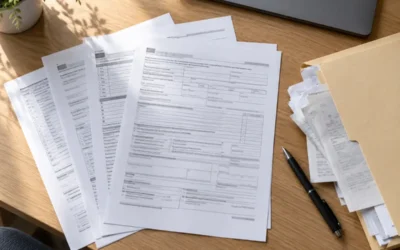
IRS Information Document Request: What The IRS Can Ask
Written By: Michael Vale Reviewed By: Bridgette Austin, Esq., EA, Co-Founder and Tax Attorney Last Reviewed: October 4, 2026 An IRS information document request is a written list of records an examiner wants from you, with a date to hand them over. It arrives on Form...