
Austin & Larson Tax Resolution
Tax Lawyers In Brighton, MI
Resolve Your Tax Debt With Trusted Legal Advocates Who Fight for Your Financial Freedom
Tax Debt is Often
Intimidating
Frustrating
Confusing
Embarrassing
Stressful
… But it Doesn’t Have to Be
The Brighton office, and what a first meeting actually covers
The office is at 812 W. Grand River Ave. in Brighton, open Monday to Friday, 8am to 6pm. You can sit down with the person who will work your case rather than a salesperson who hands you off after you sign.
Bring your last IRS notice, whatever Michigan Treasury has sent you, and a rough monthly budget. From those we pull your account transcripts and find the assessment dates that start your ten-year federal collection clock. By the end of the meeting you will know which resolution your numbers support, which is a different question from which one sounds best over the phone.
We serve the Livingston County communities around the office: Howell, the county seat, about 12 miles west. Brighton Township and Genoa Township, both bordering the city. Hartland, Hamburg and Pinckney. South Lyon, which sits over the line in Oakland County. Whitmore Lake, which straddles the Livingston and Washtenaw line and is worth a note of its own, because the IRS sets its expense allowances by county, so two Whitmore Lake neighbors on opposite sides of that boundary are held to different figures.
One thing worth saying plainly about the address. Most people with a “Brighton, MI” mailing address do not live in the City of Brighton. The city itself had an estimated population of 7,904 in July 2025. Genoa Township alone had 20,576. Brighton Township is a separate unit of government again, with its own board and its own assessor. For federal and state tax debt work this rarely changes the outcome, but it changes which local records we pull, and it is the kind of thing a firm outside the county gets wrong.
Looking For A Fresh Start in Michigan?
We Are Here To Help!
Should the weight of tax debt be pressing down on you, we urge you to connect with us to avail of a no-cost
consultation. Our objective revolves around untangling tax debt complexities for clients entangled in an array of
tax-related dilemmas. It would bring us immense satisfaction to furnish you with solutions to your inquiries and aid
you in swiftly settling your tax debt matters.
Why your county changes what the IRS will accept
The IRS decides what you can pay by subtracting allowable expenses from your income. It does not use your actual housing cost if your actual cost runs above the standard. It uses the standard, and the standard is set county by county.
Livingston County has its own line in the IRS Michigan local standards, last updated on June 29, 2026. That line sits above Wayne County and Genesee County and below Washtenaw. The gap between Livingston and Genesee is roughly a quarter: a single filer in Brighton is allowed about 25% more monthly housing and utility expense than an identical filer in Flint. Same income, same debt, same agency. Stretch that difference across a 72-month installment agreement and it compounds into a materially lower monthly payment and a smaller total collected. Nobody chose it. It is a table, and which line you land on is decided by where you sleep at night.
You can read your own line on the IRS Michigan local standards page. We do it for every Livingston County file before we quote you an outcome, because the answer changes the strategy.
The catch runs the other way too, and this is where Brighton clients get surprised. Livingston County’s median household income sits about 41% above the Michigan median in the 2020-2024 American Community Survey. Poverty here runs 5.4% against 13.4% statewide. Higher local incomes mean more Brighton households clear the IRS’s ability-to-pay threshold, which makes two of the outcomes people call us asking for harder to win: Currently Not Collectible status, and a deeply discounted Offer in Compromise.
So the honest version of the conversation is usually this. Your county gives you a better expense allowance than most of Michigan. Your county’s income levels give you a worse shot at the settlement programs. Which of those two facts dominates depends on your actual numbers, and we can tell you within one meeting which side of the line you fall on.
Michigan Treasury runs a second, separate set of Collection Financial Standards, last updated May 29, 2025. Treasury describes them as similar to the IRS standards “when possible,” which is not the same as identical. If you owe both the IRS and the State of Michigan, and plenty of people in Livingston County do, your ability to pay is being calculated twice, from two different tables, dated fourteen months apart. That is not a rounding error. It is why a payment plan that satisfies one agency can leave you short on the other.
What We Do | Tax Resolution

Offer In Compromise

Installment Agreements
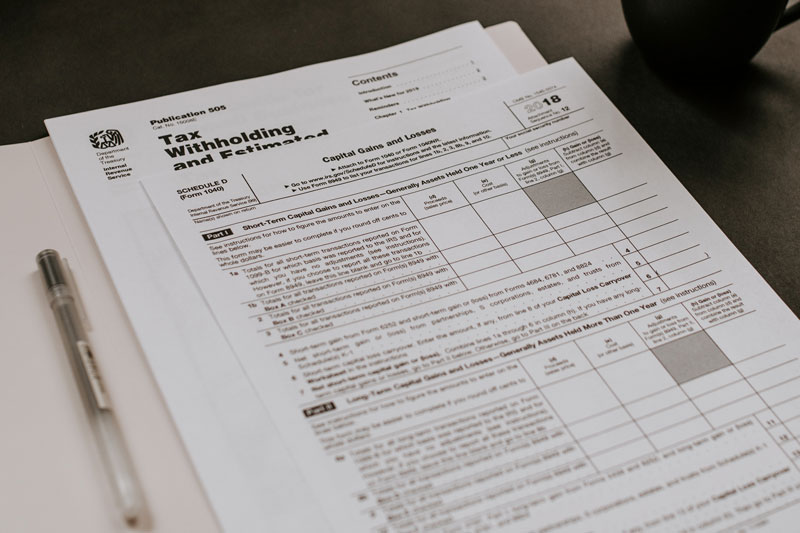
Non-Collectable Status

Compliance

Revenue Officer Representation

Levies & Wage Garnishments

Bankruptcy

Audit Representation
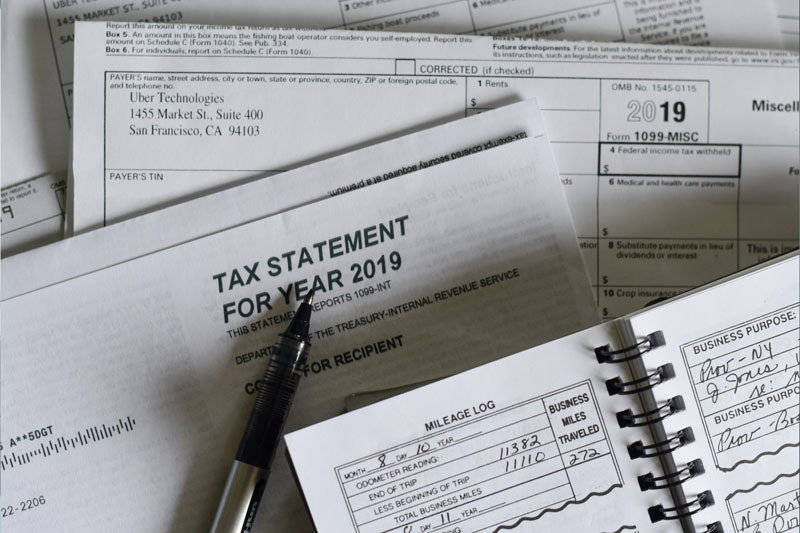
Tax Return Preparation
Handling tax resolution may feel daunting, but with our expert guidance, you'll experience relief knowing seasoned professionals are by your side. At Austin & Larson Tax Resolution, our experienced Michigan tax lawyers are dedicated to delivering the reassurance and help you deserve. Well-regarded for their expertise and in-depth understanding of Michigan State tax regulations, our proficient tax relief lawyers provide a full spectrum of services, from thorough consultations to exceptional legal advocacy, all focused on securing the most favorable resolution to your tax matters.
Who we are not the right firm for
If your only issue is preparing a current-year return with no balance due, a local CPA or a preparer will do it cheaper and we will tell you so.
If your balance is small, you are current on your filings, and you can clear it inside 72 months, you can set that up yourself on IRS Online Payment Agreement in about twenty minutes without paying anyone. We would rather say that now than bill you for it.
And if someone has promised you pennies on the dollar before looking at your transcripts, walk. The FY2025 acceptance rate is 14.1%. No one can promise you an outcome before they know your assessment dates and your county expense standard.

Our Process | Simple, Fast & Stress Free
Step 1: Initial Contact
During your first call to our office, we will ask you a brief
background of your current tax situation and determine the
most convenient office location for your free initial
consultation.
Step 2: Free Consultation
We will meet with you to review and discuss your individual
facts and circumstances to create a customized tax relief plan
for your situation and the next steps to take to resolve your tax
situation.
Step 3: Begin Resolving Debt
Once we have decided to move forward, we will immediately begin working with the IRS on your behalf to resolve your
case as quickly as possible. We will also provide advice and the steps you need to take to ensure you do not acquire
any additional debt while we work to settle your case. From the moment you retain our firm, we will be your voice with
the IRS and the point of contact for all taxing entities.
Step 4: Monitor Case Status
Some tax debt cases can be resolved quickly, while others may
have quite a bit of back and forth contact with the IRS to reach
full resolution. We will regularly monitor your case and keep
you in the loop along the way so you are never left in the dark.
Step 5: Tax Freedom!
It is our goal not only to resolve your current tax debt but also
to make sure that you don't have any further tax problems.
After we have reached resolution with your case, you will be
fully equipped with best practices to avoid future tax issues of
any kind.
Two agencies, two rulebooks
The IRS and the Michigan Department of Treasury are separate creditors. Separate forms, separate collection powers, separate clocks, and separate ability-to-pay tables. A resolution with one does nothing for the other.
Federal. The IRS generally has ten years from the date of assessment to collect, under IRC 6502. Pending Offers in Compromise, installment agreement requests, bankruptcy and Collection Due Process hearings all pause that clock. An Offer in Compromise runs on Form 656 and carries a non-refundable application fee, which the low-income certification waives along with the payments due during the investigation. The income cut-off for that certification is republished every year in the Form 656-B booklet. A lump sum offer needs 20% down with the application and the balance in five or fewer payments.
Michigan. Treasury’s Offer in Compromise runs on Form 5181 and requires an initial payment with the application. There are three grounds, and one of them matters enormously if you have already settled federally: an accepted IRS Offer in Compromise is a standalone basis for a Michigan offer, filed on Form 5181F. Treasury may then apply the same percentage the IRS granted. Settle at 35% with the IRS and Michigan may take 35% on the state liability for the same years. Most people who win a federal OIC never file the state form, and they keep paying a state balance they could have compromised.
Michigan installment agreements of 24 months or less run on Form 990. Longer terms go through the Collection Services Bureau at 517-636-5265. Treasury charges no setup fee for these, though it adds a fee to your balance for every levy it serves, and it files liens with the county Register of Deeds even when you are current on an approved payment plan. A perfected Michigan lien holds priority for seven years and can be renewed for another seven.
Michigan sales tax cannot be compromised. Individual income tax, withholding tax and corporate income tax can. If you are weighing a settlement against a payment plan, our breakdown of Offer in Compromise vs. IRS payment plan walks through how the two compare.
What changed in 2026, and what it means for your case
Three things moved this year that most pages on this topic have not caught up with.
First Time Abate is being retired. On July 8, 2026 the IRS announced Automatic Exemption from Penalty, or AEP, which replaces the old First Time Abate request. Under AEP the IRS stops assessing failure-to-file, failure-to-pay and failure-to-deposit penalties automatically, with no request from you, if you filed and paid on time for the three prior years. It phases in over summer 2026 and fully replaces First Time Abate for returns with original due dates on or after January 1, 2027. First Time Abate still applies to earlier years, and it still has to be asked for. If you have a 2022 or 2023 penalty sitting on your account, nobody is going to remove it automatically. You have to call.
Michigan refunds are still delayed. Treasury moved more than five million taxpayer accounts onto a new platform for the 2026 filing season. As of August 10, 2026, roughly 134,000 returns covering about 111,000 taxpayers were still in the processing queue. Treasury’s own Solutions Tracker still lists open issues, including a higher-than-normal denial rate on Form 4884 retirement and pension subtractions. If your Michigan refund has not arrived, that is worth ruling out before you assume it was taken to pay a balance.
Passport certification is live and the threshold moved again. The IRS can certify a seriously delinquent federal tax balance to the State Department, which blocks a passport renewal. The threshold covers assessed tax plus penalties and interest, and it is adjusted for inflation every year, so a balance that was under the line last year can cross it this year without you doing anything. Being in an approved installment agreement, an accepted Offer in Compromise, Currently Not Collectible status or a pending CDP hearing all keep you off that list.
Two numbers to keep in view while you decide. IRS interest on individual underpayments is running at 7% for the quarter ending September 30, 2026, compounded daily. And in fiscal year 2025 taxpayers submitted 38,797 Offers in Compromise and the IRS accepted 5,464, which is a 14.1% acceptance rate. Waiting is expensive, and the settlement program is narrower than the advertising suggests.
Frequently Asked Questions About Tax Lawyers in Brighton, MI
Do you have an actual office in Brighton, or just an address?
An actual office, at 812 W. Grand River Ave., Brighton, MI 48116, open weekdays 8am to 6pm. You can meet an attorney in person. The firm also has offices in Saginaw and Lansing.
Does living in Livingston County change what the IRS will accept?
Yes, and more than people expect. The IRS caps allowable housing and utility expenses county by county, and Livingston has its own line, last updated June 29, 2026. It runs about a quarter higher than neighboring Genesee County. Two identical filers, one in Brighton and one in Fenton, will be told they can afford different monthly payments purely because of the county line between them.
Does Brighton have a city income tax?
No. No city in Livingston County levies one, including Howell. That matters if you moved here from one of the 24 Michigan cities that do, because an unfiled city return from Detroit, Flint, Lansing, Jackson or Saginaw is a separate delinquency that neither the IRS nor Michigan Treasury will mention to you.
Can you handle both my IRS balance and my Michigan balance?
That is the normal engagement here. They are separate creditors running separate forms, separate clocks and separate ability-to-pay tables, so settling one leaves the other untouched. An accepted federal Offer in Compromise is also a standalone basis for a Michigan offer on Form 5181F, which is the step most people miss after they settle with the IRS. For matters outside Livingston County, see our Michigan tax lawyer page.
My Michigan refund still has not arrived. Is that because I owe?
Possibly, but check the backlog first. About 134,000 Michigan returns were still in the processing queue as of August 10, 2026 after Treasury’s platform migration. If Treasury did take your refund, it should have sent notice. Federal refunds can also be intercepted for Michigan debt through the Treasury Offset Program, and Michigan has to give you 60 days’ notice before referring you.
Do I have to come into the office?
No. We represent clients across Michigan and most of the work runs on transcripts, forms and phone calls with the IRS. The Brighton office is here if you want to sit across a desk from the person handling your case, and plenty of Livingston County clients do. It is not a requirement.
Bring your notice to the Brighton office
Bring your last IRS notice and your Michigan bill to the Brighton office and we will tell you what your numbers support before you owe us anything.
Weekdays 8am-6pm
Brighton, Saginaw, Lansing, and Jackson, MI
Free Phone or In-Person Consultation
Fill out the form below or give us a call today to speak with one of our tax experts!
Learn From The Experts

Form 1099-C And Canceled Debt: Is Forgiven Debt Taxable?
Written By: Michael Vale Reviewed By: Bridgette Austin, Esq., EA, Co-Founder and Tax Attorney Last Reviewed: September 4, 2026 If you received a Form 1099-C, the canceled amount on it is usually taxable income, and you generally report it on Schedule 1 of your Form...

Who Pays Back Taxes After Divorce?
Written By: Michael Vale Reviewed By: Bridgette Austin, Esq., EA, Co-Founder and Tax Attorney Last Reviewed: September 2, 2026 If you filed a joint tax return, you both do. The IRS treats a joint return as "joint and several," which means each spouse is on the hook...

Innocent Spouse Relief Vs Injured Spouse: Which One Do You Need?
Written By: Michael Vale Reviewed By: Bridgette Austin, Esq., EA, Co-Founder and Tax Attorney Last Reviewed: August 31, 2026 Two people sign one tax return, and later the IRS comes after both of them. If that's you, there are two separate fixes, and people mix them up...