
Austin & Larson Tax Resolution
Tax Lawyer In Milford Township, MI
Owe back taxes to the IRS or the State of Michigan? We resolve both. Austin & Larson Tax Resolution is a Michigan firm of tax attorneys, CPAs, and IRS Enrolled Agents.
Tax Debt is Often
Intimidating
Frustrating
Confusing
Embarrassing
Stressful
… But it Doesn’t Have to Be
You owe two collectors, not one
If you owe back taxes in Milford Township, the IRS and the Michigan Department of Treasury are both after the money, and they follow different rules. A plan that settles the federal debt can leave the state debt fully intact. Most national tax-relief ads only mention the IRS. The Michigan side is where Milford residents get caught off guard, so we read both from day one.

Before we recommend anything, we read three clocks
Each clock points to a different move. Settle, wait, set up a plan, or fight the assessment. Most firms only look at the first one.
The federal debt has an expiration date
The IRS has 10 years from the date it assesses a tax to collect it. That deadline is the Collection Statute Expiration Date, set by Internal Revenue Code section 6502. When it passes, the balance is wiped and any federal lien has to be released. Two things trip people up. The clock starts at assessment, not the day you filed, and certain moves change it. Filing an Offer in Compromise pauses the clock. Currently Not Collectible status does not. So an old debt can run out while you sit in hardship status. If your expiration date is close, the smartest move is sometimes to do nothing that resets it.
State tax debt does not work like federal debt
Michigan is harsher. The state’s six-year limit, under Public Act 122 of 1941 and MCL 600.5813, only stops the Treasury from suing you in court. It does not erase what you owe. After six years the Collection Services Bureau can still take your refunds, levy your bank account, and hold a lien on your property. A Michigan tax lien runs seven years and can be renewed. And a single voluntary payment can restart the six-year clock. A Milford resident can settle with the IRS and still owe the State of Michigan for years, which is why the state piece needs its own plan.
The balance grows while you decide
Penalties and interest do not pause. The IRS failure-to-pay penalty and interest compound on the federal side, and Michigan adds its own penalties plus a 55 dollar warrant cost on every levy it serves. The longer a balance sits, the more of each payment goes to penalties instead of the principal. This clock decides how urgent your case is, and it is the reason waiting almost never helps.
Read together, the three clocks tell us whether to settle, wait out a statute, structure a payment plan, or challenge the assessment. That reading is the first thing we do, free, on a case review.
Looking For A Fresh Start in Michigan?
We Are Here To Help!
Should the weight of tax debt be pressing down on you, we urge you to connect with us to avail of a no-cost
consultation. Our objective revolves around untangling tax debt complexities for clients entangled in an array of
tax-related dilemmas. It would bring us immense satisfaction to furnish you with solutions to your inquiries and aid
you in swiftly settling your tax debt matters.
The state rule that costs Milford taxpayers the most
People assume both balances vanish after 10 years. Only the federal one does. Here is the side-by-side.
Federal back taxes
- 10-year limit from assessment, then the debt is legally wiped (IRC 6502).
- The federal lien must be released within 30 days of that date.
- Offers in Compromise are a real path, when you qualify.
- Filing an offer pauses the clock; hardship status does not.
State back taxes
- The six-year limit only blocks a lawsuit. The debt itself never expires.
- The Treasury can keep taking refunds, levying accounts, and filing liens.
- A state tax lien runs seven years and can be renewed.
- One voluntary payment can restart the six-year clock.
- For businesses, owners can be held personally liable, and a liquor license can be pulled.
What We Do | Tax Resolution

Offer In Compromise

Installment Agreements

Non-Collectable Status

Compliance

Revenue Officer Representation

Levies & Wage Garnishments

Bankruptcy

Audit Representation

Tax Return Preparation
Handling tax resolution may feel daunting, but with our expert guidance, you'll experience relief knowing seasoned professionals are by your side. At Austin & Larson Tax Resolution, our experienced Michigan tax lawyers are dedicated to delivering the reassurance and help you deserve. Well-regarded for their expertise and in-depth understanding of Michigan State tax regulations, our proficient tax relief lawyers provide a full spectrum of services, from thorough consultations to exceptional legal advocacy, all focused on securing the most favorable resolution to your tax matters.
Two local specifics that change a Milford case
Milford is one of Oakland County’s higher-income communities, with a lot of small manufacturers and business owners near the GM Proving Ground. Two recent, local details decide a surprising number of cases here, and the directory listings almost never mention them.
1. Michigan’s 2025 decoupling: you can owe the state even when your federal return looks clean
On October 7, 2025, Michigan signed House Bill 4961 (Public Act 24 of 2025). Starting with tax years after December 31, 2024, Michigan stopped following five business tax breaks in the federal One Big Beautiful Bill Act. In plain terms, your Michigan taxable income is now calculated on different rules than your federal return, and the difference usually means a higher state number.
What changed for Michigan, even though the federal rules got more generous:
- Research and experimental costs have to be spread over five years for Michigan, instead of deducted right away.
- 100 percent bonus depreciation is disallowed for corporations, and limited for individuals and pass-through entities.
- Section 179 equipment expensing is capped at the older, lower Michigan limit, not the higher federal one.
- The business interest deduction uses Michigan’s stricter calculation, so the deduction is smaller.
For a Milford business that buys equipment, runs R&D, or carries debt, that can mean a Michigan balance you did not expect, and separate Michigan depreciation schedules going forward. Our CPAs and tax attorneys run both sets of numbers, and if a state balance is already in collections, we handle that side too.
2. The IRS decides what you can afford using Oakland County’s own numbers
When you cannot pay in full, the IRS calculates your ability to pay using its Collection Financial Standards, and the housing and utilities piece is set county by county. There is a specific Oakland County allowance by household size, and it reflects local housing costs here, not a statewide average. That single number drives what the IRS treats as your disposable income in an Offer in Compromise, a payment plan, or a hardship case. Using your county’s actual figure, rather than a national rule of thumb, is part of building a number the IRS will accept. The current standards run from April 2025 through June 2026.
When we will tell you to skip hiring us
We turn down work when paying a firm does not make sense for you. That is the test we want you to apply to everyone, including us.
If you can pay in full without hardship, you do not need representation. Pay the balance and ask us about penalty abatement only.
If your IRS expiration date is months away and your case is simple, the move may be to hold steady, not to file an offer that pauses the clock.
“Pennies on the dollar” is a marketing line, not a promise. Most offers are not accepted. We will tell you if yours is a long shot before you pay us a dollar.
We cannot settle a balance until your past returns are filed. If you have unfiled years, that work comes first, and we will be upfront about it.
If a national brand pitches you, ask who actually does the work. A lot of “tax relief” advertisers are lead generators that sell your case to whoever buys it. We are a Michigan team of attorneys, CPAs, and Enrolled Agents, and you can check any attorney’s standing with the State Bar of Michigan.
Be wary of any firm that guarantees a Michigan write-off. The state rarely forgives debt the way the IRS does.
Our Process | Simple, Fast & Stress Free
Step 1: Initial Contact
During your first call to our office, we will ask you a brief
background of your current tax situation and determine the
most convenient office location for your free initial
consultation.
Step 2: Free Consultation
We will meet with you to review and discuss your individual
facts and circumstances to create a customized tax relief plan
for your situation and the next steps to take to resolve your tax
situation.
Step 3: Begin Resolving Debt
Once we have decided to move forward, we will immediately begin working with the IRS on your behalf to resolve your
case as quickly as possible. We will also provide advice and the steps you need to take to ensure you do not acquire
any additional debt while we work to settle your case. From the moment you retain our firm, we will be your voice with
the IRS and the point of contact for all taxing entities.
Step 4: Monitor Case Status
Some tax debt cases can be resolved quickly, while others may
have quite a bit of back and forth contact with the IRS to reach
full resolution. We will regularly monitor your case and keep
you in the loop along the way so you are never left in the dark.
Step 5: Tax Freedom!
It is our goal not only to resolve your current tax debt but also
to make sure that you don't have any further tax problems.
After we have reached resolution with your case, you will be
fully equipped with best practices to avoid future tax issues of
any kind.
Our process
- Free case review – We read your three clocks and lay out your realistic options. No charge, no commitment.
- Transcripts and expiration dates – We pull your IRS account transcripts, confirm each year’s assessment date, and calculate your real expiration date. We check your Michigan account too.
- Stop active collection – If there is a levy or garnishment running, we contact the IRS or Treasury to release it and become your single point of contact.
- The plan – We file what needs filing, then pursue the resolution your clocks support: a settlement, a payment plan, hardship status, or an appeal.
- Closeout – We confirm liens are released and give you the steps to stay clear of the next problem.
Frequently Asked Questions
Can the IRS take my house in Milford Township?
Does Michigan tax debt ever go away?
I got a Michigan notice for 2025 but my federal return looked fine. Why?
Are you the team doing the work, or a lead-generation service?
What if I have not filed in years?
Is “pennies on the dollar” real?
How long does resolution take?
Can you stop a wage garnishment?
Tell us what you owe, and to whom
We will read your three clocks and lay out your real options, at no charge. The sooner we look, the more room there usually is to work.
Clients in nearby Milford, Hartland and White Lake work with the same Austin & Larson team. Milford Township residents can meet with us at the Brighton office location.
Weekdays 8am-6pm
Brighton, Saginaw, Lansing, and Jackson, MI
Free Phone or In-Person Consultation
Fill out the form below or give us a call today to speak with one of our tax experts!
Learn From The Experts

Qualified Amended Return: Avoiding The 20% IRS Penalty
Written By: Michael Vale Reviewed By: Bridgette Austin, Esq., EA, Co-Founder and Tax Attorney Last Reviewed: October 18, 2026 A qualified amended return is the one move that erases the IRS accuracy-related penalty instead of arguing about it later. File it before the...

Accountant Client Privilege In Michigan: Where It Holds And Fails
Written By: Michael Vale Reviewed By: Bridgette Austin, Esq., EA, Co-Founder and Tax Attorney Last Reviewed: October 11, 2026 Michigan gives your accountant a real privilege. Federal law gives you almost none. Under Michigan's own statute, a CPA can't be made to turn...
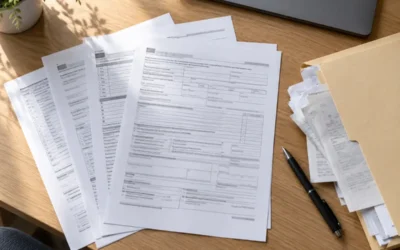
IRS Information Document Request: What The IRS Can Ask
Written By: Michael Vale Reviewed By: Bridgette Austin, Esq., EA, Co-Founder and Tax Attorney Last Reviewed: October 4, 2026 An IRS information document request is a written list of records an examiner wants from you, with a date to hand them over. It arrives on Form...