

Written By: Michael Vale
Reviewed By: Bridgette Austin, Esq., EA, Co-Founder and Tax Attorney
Last Reviewed: August 21, 2026
Yes, you can file back taxes even if you have no W-2s, no 1099s, and no shoebox of receipts. The IRS already holds most of the income data reported under your Social Security number, and you can pull it in about 15 minutes. The pieces it does not have, like cash income and your business expenses, you rebuild from bank records and reasonable estimates. Here is the order a tax resolution team works in: pull your transcripts, rebuild the gaps, file the oldest year first, then deal with the balance. Work in that order and missing paperwork stops being the thing that keeps you stuck.
What does it mean to file back taxes without records? It means preparing and submitting past-due tax returns when you no longer have the source documents, such as W-2s, 1099s, or receipts. You reconstruct the numbers from IRS transcripts and your own financial history, then file a complete, signed return for each year you missed.

How to file back taxes without records: the five steps
The whole process comes down to five steps, in order. Rushing or skipping one is what turns a weekend job into a year-long headache.
- Pull your IRS transcripts for every missing year.
- Rebuild the income and expenses the transcripts do not show.
- Confirm how many years you actually need to file.
- File each return, oldest year first.
- Set up a plan for any balance you owe.
The rest of this guide walks through each step, plus the traps that cost people money along the way.
Start with your IRS transcripts
Your first move is to pull your IRS transcripts, because the agency keeps a record of almost every W-2 and 1099 filed under your number. For most people this recovers the bulk of what they need in one sitting. The one you want is the Wage and Income Transcript, and it goes back the past 10 years.
You can get it three ways. The fastest is a free IRS online account through the agency’s Get Transcript tool, which shows the data on screen right away. You can also request it by mail or phone, or file Form 4506-T to have transcripts sent to you, which adds five to 10 days.
There are four transcript types, and each one does a different job.
| Transcript | What it shows | Use it to |
|---|---|---|
| Wage and Income | W-2s, 1099s, and other income forms filed by others | Rebuild your income for a missing year |
| Tax Return | Line items from a return you already filed | Check a year you filed but cannot find |
| Tax Account | Filing status, payments, IRS adjustments | See payments and IRS actions on your account |
| Record of Account | Return and account data combined | Get the full picture for one year |
Pull the Wage and Income Transcript for each unfiled year first. That single document is the backbone of every return you are about to build.
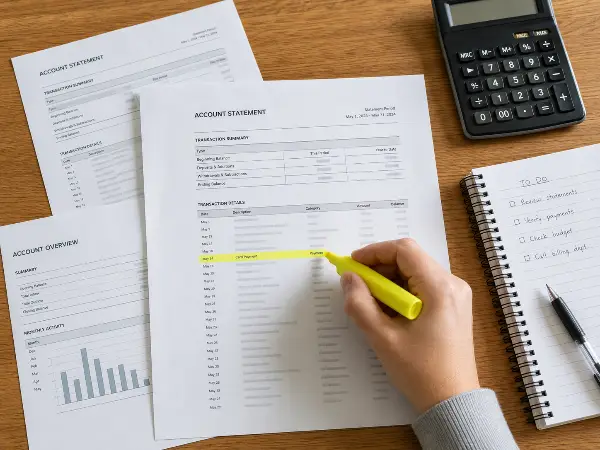
What your wage and income transcript will not show you
A transcript is a starting point, not a finished return, and copying it line for line is one of the most expensive mistakes people make. The IRS only knows what other people reported about you. It does not know the rest of your financial life.
Here is what a transcript leaves out. Cash income and tips that no one filed a form for. Most self-employment income from clients who never sent a 1099. The cost basis on stock sold years ago, which the transcript can show as if the entire sale were profit. And every deduction and credit you qualify for, from business expenses to student loan interest to the child tax credit.
So if you file straight off the transcript, one of two things usually happens. You skip your deductions and overpay. Or you miss income the IRS is still expecting to see, and a notice shows up later. Neither is the goal.
Fill the gaps with your own records. Pull bank and credit card statements and sort deposits into income and withdrawals into expenses. Search your email for invoices and receipts. For a business with thin records, a tax professional can use the Cohan rule, which lets you estimate expenses with reasonable, credible support when exact receipts are gone. Estimates need a basis you can defend, so keep your notes.
How many years of back taxes do you have to file in 2026?
In most cases the IRS asks for the current year plus the past six years to bring you back into compliance. That comes from IRS Policy Statement 5-133, and it is an administrative guideline, not a hard law, so your facts can move the number.
You may need to file more than six years if you had large income, owe business or payroll tax, or did not file because of fraud. State rules can reach back further too. On the other side, someone with very low income may be asked for fewer. When you have several years stacked up, this rule is what keeps the job from feeling endless: you usually are not filing a decade of returns, you are filing seven.
Will you lose your refund if you wait?
Yes, and this is the part that quietly costs people the most. If the IRS owes you money, you have three years from the original due date to file and claim it. Miss that window and the refund is gone, and you cannot apply it to another year either.
There is no late penalty on a year where you were owed a refund, so waiting feels harmless. It is not. Every filing season that passes, another year of refunds can age out for good. If you think any of your missing years had withholding or refundable credits, those are the years to file first.

The substitute return: what the IRS files if you do not
If you ignore a missing year long enough, the IRS can file a return for you, called a substitute for return. It uses only the income on your transcript, gives you no deductions and no credits, files you at the least favorable status, and bills you for the result. It is almost always higher than what you actually owe.
The good news: you can usually replace a substitute return by filing your own accurate return for that year, even after the IRS has acted. People who do this often lower the bill, because they get the deductions the IRS left out.
Late-filing penalties, and why filing still wins
Filing late costs far less than not filing at all. The failure-to-file penalty runs 10 times faster than the failure-to-pay penalty, so the worst thing you can do is stay silent because you cannot pay.
| Penalty | Rate | Cap |
|---|---|---|
| Failure to file | 5% of tax owed per month | 25% |
| Failure to pay | 0.5% of tax owed per month | 25% |
In any month both apply, the failure-to-file penalty drops to 4.5% so the combined rate is 5%. Interest is separate, set quarterly, and compounds daily until you pay in full. You can confirm the current rules on the IRS failure to file penalty page. The takeaway does not change: file now, pay what you can, and sort out the rest.

Handling the balance once your returns are filed
Filing is step one. If you owe more than you can pay, you have options, and setting one up stops most of the aggressive collection activity like liens and levies.
Start with a payment plan. The IRS offers short-term and long-term installment agreements you can often set up online, and they let you pay over time while penalties keep shrinking relative to the balance. Next, ask about penalty relief. First Time Abatement can wipe out penalties for a single clean year, and reasonable cause relief can help if illness, a disaster, or another real hardship caused the delay. There is also the Offer in Compromise, which settles the debt for less than the full amount. It is real, but it is narrow, and most applicants do not qualify, so treat it as a possibility to check, not a plan to count on.

When should you bring in a professional?
You can handle a single missing year with clean bank records on your own. Bring in help when the job gets heavier: several unfiled years, business or cash income, a substitute return already on file, or a letter from the IRS that has moved past reminders into collection.
An enrolled agent or a tax resolution firm can pull every transcript, reconstruct the years you cannot, prepare and file every past-due return in the right order, and handle the balance and penalties in one coordinated push. If the IRS is already calling, that coordination is worth it.
Filing back taxes without records is mostly a sequencing problem, not a paperwork problem. Pull what the IRS has, rebuild what it does not, file oldest to newest, and handle the balance last. Do it in that order, on your own or with a tax resolution team, and you can be back in good standing this year.
FAQs
Can you file back taxes without records?
Yes. The IRS holds most of your income data on a Wage and Income Transcript going back 10 years, and you rebuild the rest, like cash income and deductions, from bank statements and reasonable estimates. Then you file a complete return for each missing year.
How do I get my old tax documents from the IRS?
Request a Wage and Income Transcript through a free IRS online account, by phone or mail, or with Form 4506-T. It lists the W-2s and 1099s filed under your Social Security number for up to the past 10 tax years.
How many years of back taxes do I have to file?
Usually the current year plus the past six, which is the IRS guideline for getting compliant. You may owe more years with business income or fraud, and you have only three years from a return’s due date to claim any refund.
Can I file back taxes without a W-2?
Yes. If you cannot get a copy from your employer, use Form 4852 as a substitute for a W-2. Your last pay stub of the year is the best source for the wage and withholding figures the form asks for.
What if I had cash income and kept no records?
You still have to report it. Estimate it from bank deposits, invoices, and any records you can find, and have a tax professional apply the Cohan rule to support reasonable expense estimates. Keep notes on how you reached each number.
Can I still get a refund on a return this old?
Only if the original due date was within the last three years. After that the refund is forfeited, and it cannot be moved to another year, so file older refund years as soon as you can.
Is it ever too late to file back taxes without records?
It is never too late to file, and there is no deadline that bars a late return. But the three-year refund window can close, and unfiled years stay open to IRS action forever, so sooner is always cheaper.

Bridgette Austin, Esq., EA, spent three years at Michigan State University’s Tax Clinic representing low-income taxpayers before the IRS – two as a student clinician, one as a post-graduate fellow. That work shaped her practice. A Bellaire, Michigan native with a Northern Michigan University bachelor’s and an MSU law degree, she now resolves IRS and State of Michigan tax debt cases at Austin & Larson.
Recent Comments