

Written By: Michael Vale
Reviewed By: Bridgette Austin, Esq., EA, Co-Founder and Tax Attorney
Last Reviewed: June 23, 2026
Most people need to file the last six years of back tax returns to get current with the IRS. That covers most individual cases. Six years is policy, not law, so the agency can ask for fewer years or many more depending on your file. If you have a pile of unfiled and delinquent returns, the real number turns on your income, whether a business is in the mix, and who at the IRS is holding your case.
Back tax returns are federal returns you were required to file in earlier years but never sent in. To get current, the IRS generally wants the most recent six, a benchmark it sets in Policy Statement 5-133. Filing those years makes you eligible for payment plans and settlements, and it is usually the first move in any cleanup.
I have watched people lose sleep over a decade of missing returns when the fix was six years and a phone call. Here is what the IRS really requires, when that number climbs, and how to file without digging deeper.
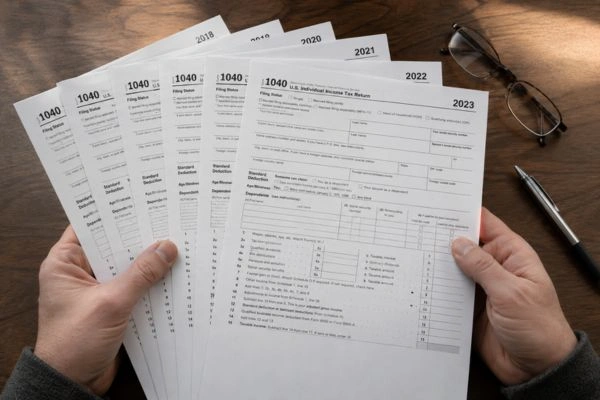
Which Six Years Does The Irs Count?
Count back from the most recent return that is currently due. The IRS takes the year due now and counts back six.
Say it is spring 2026 and you have not filed since 2017. Once the 2025 return comes due, your six-year window runs 2019 through 2024. The years 2017 and 2018 fall outside it. In most cases you can leave those two alone and still be compliant. Not every missing year has to come in.
When The Irs Wants More Than Six Years
The IRS reaches past six years in three situations: a large suspected balance on an older year, unfiled business returns, or a revenue officer assigned to your case. A revenue officer is a local IRS collector who handles tougher files in person, and they tend to want more.
A few other things push the number up. A long history of skipping returns. Income from illegal sources. A balance big enough that chasing it is worth the agency’s time. If you owe back taxes tied to a business with payroll, expect the IRS to dig deeper than for a simple W-2 filer. Going past six years needs a manager’s sign-off, so it is not the default.

Is There A Time Limit On Unfiled Returns?
No. The assessment clock only starts when you file. Skip a year completely and it stays open forever, with no deadline in your favor.
Once you file, the timers start. The IRS normally has three years to audit a return, six years if you left off more than 25 percent of your income, and ten years from assessment to collect it. That last one is the collection statute, or CSED. Refunds have their own short fuse. Here is how the main clocks line up.
| Clock | How long it runs | When it starts |
| Audit (assessment) | 3 years, or 6 if you omit over 25% of income | When you file the return |
| A year you never filed | No limit at all | It never starts until you file |
| Collection (CSED) | 10 years | When the tax is assessed |
| Refund claim | 3 years | From the original due date |
Because these limits hang on what you can prove, keep your paperwork. The IRS explains how long to keep records, and for a year you never filed, the answer is indefinitely. That gap is why the old three-year audit window gives non-filers no comfort. It never opens until you file.

What Happens If You Don’t File At All
Ignore it long enough and the IRS files for you. That version, a substitute for return, is built to cost you more than the real number.
It uses the W-2 and 1099 data third parties reported, then leaves out every deduction, credit, and filing status that would help you. You get a Notice of Deficiency, and if you sit on it for 90 days, the inflated bill sticks. The good news is you can replace a substitute return by filing your own accurate one, which almost always drops the balance. The IRS rarely builds substitutes for years older than about five.
The Cost Reaches Beyond The IRS
Missing returns cause trouble away from the IRS too. Lenders often ask for recent tax returns or IRS transcripts to confirm income, especially from self-employed borrowers, so a gap can stall a mortgage, a refinance or a business loan.
Your credit report is less exposed than it used to be. Tax liens have not appeared on Equifax, Experian or TransUnion reports since 2018, but a filed Notice of Federal Tax Lien is still a public record that lenders and others can find.
Social Security is at risk in 2 ways. If you owe, the IRS can take up to 15% of Social Security retirement and survivors benefits through the Federal Payment Levy Program, though disability benefits have been off limits to that program since 2015. And if you work for yourself, income you never report earns no Social Security credits, which can shrink the benefit you collect later.
The Penalties Stack Up Fast
Late filing is the part that hurts. The failure-to-file penalty runs 5 percent of the unpaid tax per month and caps at 25 percent, and that failure-to-file penalty alone can outpace what you owed.
On top of it sits a failure-to-pay penalty of half a percent per month, plus interest that compounds daily (recently 7 to 8 percent). If this is your first slip and you have a clean record, first-time abatement can wipe the penalty out, and a reasonable-cause story (illness, a death in the family, records lost in a disaster) can do the same.
Criminal charges are rare. When the government does prosecute someone for not filing, the usual charge is willful failure to file under IRC 7203, a misdemeanor. Tax evasion under IRC 7201 is a felony, and it takes more than missing returns: prosecutors have to show an act meant to evade, such as hiding income or assets. For most people who fall behind, the exposure is civil penalties and interest.
Don’t Walk Away From A Refund
File an old return more than three years past its deadline and any refund on it is gone. The Treasury keeps it.
I have seen people sit on a year that owed them money because they feared the years they owed. That is backwards. A refund from an in-window year can offset a balance from a bad one, so pulling the whole picture together usually helps.

How Do You File Back Tax Returns?
Start with transcripts, not memory. What you remember earning in 2020 is not what the IRS matches against, so work from their records first.
Here is the order that works.
- Pull your IRS account and wage and income transcripts for each open year. They show what the IRS already has and flag any substitute return.
- Rebuild the rest. Lost W-2s are not a dead end; transcripts fill most gaps and bank records cover the rest.
- File accurate returns for the years required, and replace any substitute returns to cut the balance.
- Mind the e-file limit. Only the current year and the two before it can be e-filed; older years go on paper, which takes the IRS months.
- Once you are current, line up a fix: an installment payment plan for monthly payments, or a settlement if you qualify.
You might be tempted to file every missing year going back a decade. Hold off. Filing a year the IRS never asked for can hand it income and restart clocks you would rather leave shut. File what is required, plus any year carrying a substitute return, and get a second read before mailing the rest.
One honest take on doing it yourself. A two-year W-2 catch-up, file it solo. Six years with 1099 income, a rental, and a substitute return on the books is not a weekend project. Treating it like one is how a filing problem becomes a collection problem.
These habits keep a catch-up filing on track:
- Use each year’s own forms. Rules and amounts change every year, so an older return goes on that year’s Form 1040 and schedules, not the current version.
- Mail each paper return separately. For years outside the e-file window, send each return in its own envelope by certified mail and keep the receipt as proof of the date you filed.
- Pay what you can now. Any payment lowers the balance that the failure-to-pay penalty and interest are figured on, even before a payment plan is in place.
- Stay current. File this year’s return on time and keep up with withholding or estimated payments. A new balance can put an existing payment plan in default, and the IRS expects current filing and estimated payments before it will consider an offer in compromise.
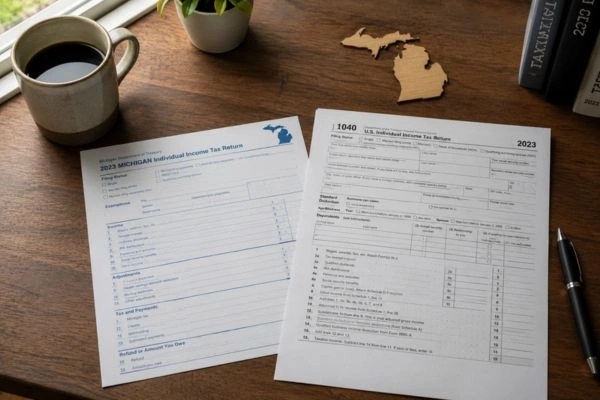
Michigan Runs On Its Own Clock
Federal is only half the picture here. Michigan’s Department of Treasury runs its own timeline that does not match the IRS.
The state generally looks back fewer years than the federal six, but like the IRS, Michigan has no time limit on a year you never filed, and its refund deadlines differ. So you can clear your federal back tax returns and still have a state balance quietly running. In our Michigan practice, that federal-and-state gap is the thing people forget, and the state is happy to let them. Handling both at once is the only way the math closes, which is where having a knowledgeable partner in your corner earns its keep.
For most back tax returns, the number that matters is six. File those years accurately, swap out any substitute returns, and you have the standing to settle whatever is left. Wait, and the IRS picks the number for you, almost always a bigger one. If your file has a business, several missing years, or a Michigan balance riding along, the smartest first move is not another month of dodging the mail. It is getting the right returns filed.
Frequently Asked Questions
How many years of back tax returns does the IRS require?
Most individual taxpayers need to file the last six years of back tax returns to be considered compliant, a benchmark set in IRS Policy Statement 5-133. The IRS can ask for fewer years if some had no filing requirement, or more if you owe a large balance, have unfiled business returns, or a revenue officer is assigned. Six years is policy, not law.
Can the IRS go back more than six years on unfiled returns?
Yes. There is no statute of limitations on a return you never filed, so that year stays open indefinitely until you file it. In practice the IRS enforces the recent six years for most people and needs managerial approval to demand more, though high earners and businesses often see a longer reach.
What happens if the IRS files a substitute for return for me?
The IRS builds the return from W-2 and 1099 data only, with no deductions, credits, or favorable filing status, so the bill usually runs much higher than your true liability. You can replace it by filing your own accurate return, which typically lowers the balance. Ignore the Notice of Deficiency for 90 days and the inflated amount becomes final.
Will filing back tax returns trigger an IRS audit?
Filing back tax returns does not automatically trigger an audit, though inconsistent or complex numbers can raise scrutiny. Keep in mind that once you file, the IRS generally has three years to audit that return, or six years if you omitted more than 25 percent of your income. Accurate, well-documented returns are your best protection.
How many years of back tax returns can I e-file?
Generally you can only e-file the current tax year and the two years before it. Anything older has to be mailed on paper, and the IRS can take several months to process those returns, longer if a substitute return is already on file. A tax professional’s software can sometimes reach slightly further back.
Do I lose old refunds if I file back tax returns late?
Often, yes. A refund must be claimed within three years of the original due date, so a return filed later than that forfeits the money to the Treasury. Filing in-window years is still worth it, because a refund from one year can offset taxes owed on another.

Bridgette Austin, Esq., EA, spent three years at Michigan State University’s Tax Clinic representing low-income taxpayers before the IRS – two as a student clinician, one as a post-graduate fellow. That work shaped her practice. A Bellaire, Michigan native with a Northern Michigan University bachelor’s and an MSU law degree, she now resolves IRS and State of Michigan tax debt cases at Austin & Larson.
Recent Comments