

Most seniors don’t owe the IRS a dime, and many don’t need to file a return at all. But “most” isn’t “all,” and the line between the two comes down to your filing status, your gross income, and whether Social Security is your only money coming in.
Do seniors need to file tax returns? If Social Security is your sole income source, the answer is almost always no. Once you add a pension, retirement account withdrawals, part-time wages, or investment income on top of that, you may cross the IRS filing threshold. For the 2025 tax year (the return you’d file in 2026), a single person age 65 or older must file if gross income hits $17,750 or more, according to IRS Publication 554. That number already bakes in the higher standard deduction seniors receive.
I’ve seen dozens of retirees skip filing because they assumed the rules hadn’t changed. They had. And some of them left refund money on the table for years.
What Are the 2025 Filing Thresholds for Seniors Over 65?
The IRS sets a different gross income floor for each filing status. These figures come straight from the IRS seniors and retirees page and Publication 554 for 2025.
| Filing Status | Age 65+ Threshold |
| Single | $17,750 |
| Head of Household | $25,625 |
| Married Filing Jointly (both 65+) | $34,700 |
| Married Filing Jointly (one 65+) | $33,100 |
| Qualifying Surviving Spouse | $33,100 |
| Married Filing Separately | $5 |
If your gross income (excluding non-taxable Social Security) falls below your threshold, you’re off the hook. Married filing separately is the outlier. That $5 threshold catches almost everyone, which is one reason most married couples file jointly.

How Does Social Security Affect Your Filing Requirement?
Here’s where people get tripped up. Social Security benefits don’t count toward the gross income test for determining whether you need to file. If your only income is Social Security, you generally don’t file.
But (and this is a big “but”) a portion of your benefits can become taxable once you have other income. If half your Social Security plus all other income, including tax-exempt interest, tops $25,000 for single filers or $32,000 for married filing jointly, then up to 50% of your benefits get taxed. At higher combined incomes, up to 85% becomes taxable. According to the Social Security Administration, roughly 56% of beneficiary families owe tax on at least some portion of their benefits.
One myth that won’t die: “The new law made Social Security tax-free.” It didn’t. The 2025 legislation left Social Security taxation rules completely unchanged. I’ve seen this rumor circulate on forums and even in a few news headlines, and it’s wrong every time.

What Changed for Seniors Filing in 2026?
The biggest shift is the new enhanced senior deduction that took effect for the 2025 tax year. If you were born before January 2, 1961 (meaning you’re 65 or older), you can claim an extra $6,000 deduction on top of your regular standard deduction. Married couples filing jointly where both spouses qualify can claim $12,000.
This isn’t a tax credit. It’s a deduction, so it lowers your taxable income rather than your tax bill dollar for dollar. Still, for a single senior with $25,000 in pension income, that extra $6,000 off the top is real money.
There’s a catch, though. The deduction phases out for modified adjusted gross income above $75,000 (single) or $150,000 (joint). And while the IRS calls the paperwork “simple,” tax professionals report that the phase-out calculations on Schedule 1-A are already causing errors for people using basic tax software. This deduction runs through the 2028 tax year, so it’s not a one-time thing.

Do Married Seniors Have Different Rules?
Yes, and the differences matter more than most people realize.
If both spouses are 65 or older and file jointly, you don’t need to file unless combined gross income reaches $34,700. When only one spouse is 65+, that drops to $33,100. These thresholds are significantly higher than what applies to younger couples ($31,500 when both are under 65), because the IRS adds an extra standard deduction amount for each qualifying spouse.
Married filing separately is a different story. If you and your spouse live together at any point during the year but file separate returns, all of your Social Security benefits get included in gross income. That alone can push you over the filing threshold. I’ve watched couples choose separate filing to “keep things simple” and accidentally create a tax bill that wouldn’t have existed on a joint return. It’s one of the most common tax filing mistakes among retirees.

Should You File Even If You Don’t Have To?
Sometimes. And I’d argue it’s the smarter play more often than people think.
If your employer or pension administrator withheld federal taxes from your payments, you won’t get that money back unless you file. The IRS doesn’t send refund checks to people who never submitted a return. According to IRS data, billions in unclaimed refunds sit with the government every year because eligible taxpayers never filed.
Filing also starts the clock on the statute of limitations for IRS audits. If you don’t file, that clock never begins. And if you qualify for the Credit for the Elderly or Disabled, filing is the only way to claim it. That credit reduces your tax bill dollar for dollar, but only if you actually owe something and submit the return.
Free help exists, too. The IRS Tax Counseling for the Elderly (TCE) program and AARP Tax-Aide serve people 60 and older at no cost. Only about 1.2 million seniors used TCE in 2024 out of roughly 22 million who were eligible, per the IRS Data Book. That’s a lot of free help going unused.

What About State Taxes on Social Security?
Federal rules apply the same way in all 50 states. But 8 to 10 states still tax Social Security benefits as of 2026, including Connecticut, Minnesota, and Vermont. Others offer senior-specific credits or full exemptions. If you’re considering relocating in retirement, the state tax picture can save (or cost) you more than any federal filing strategy. A team that understands the tax side of financial planning can help you sort through the state-by-state differences before you move.
Seniors who owe back taxes from prior years face a separate set of questions around how tax relief programs work and whether an installment agreement or offer in compromise makes sense. Those situations go well beyond the “do I need to file?” question, but they’re worth flagging because unfiled tax returns only make IRS problems worse.
The bottom line for 2026: check your gross income against the threshold for your filing status. If you’re under it and Social Security is your main income, you probably don’t need to file. But if there’s any withholding to reclaim or credits to grab, do seniors need to file tax returns? In that case, yes, you should.
Frequently Asked Questions
Do I need to file a tax return if my only income is Social Security?
Generally, no. Social Security benefits aren’t included in the gross income test the IRS uses to decide who must file. If Social Security is your sole income, your benefits typically aren’t taxable and you don’t need to submit a return. The one exception: if federal taxes were withheld from your benefits, file to get that money back.
What is the income threshold for seniors to file taxes in 2025?
For the 2025 tax year, a single person 65 or older must file if gross income reaches $17,750. Married couples filing jointly where both spouses are 65+ have a threshold of $34,700. Head of household filers 65+ must file at $25,625. These thresholds come from IRS Publication 554 and reflect the higher standard deduction for seniors.
Does the new $6,000 senior deduction mean I don’t have to file?
Not directly. The deduction lowers your taxable income, but the filing threshold is based on gross income before deductions. You could still be required to file while owing zero tax after applying the deduction. Married couples where both spouses qualify can claim up to $12,000 combined.
Will the new law make Social Security benefits tax-free?
No. The 2025 legislation (One Big Beautiful Bill) did not change Social Security taxation rules. Benefits are still taxable based on combined income thresholds of $25,000 (single) and $32,000 (joint). About 56% of beneficiary families owe tax on some portion of their benefits.
Should I file a tax return even if I’m under the income threshold?
Yes, in several situations. If any taxes were withheld from your pension or wages, filing is the only way to reclaim that money. Filing also starts the three-year statute of limitations clock and allows you to claim credits like the Credit for the Elderly or Disabled.
Are there free tax filing options for seniors?
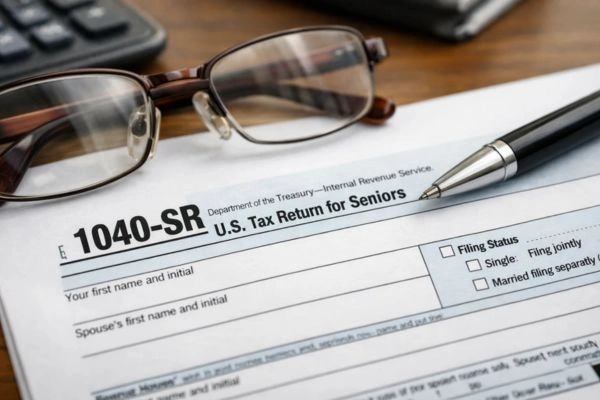
Yes. The IRS Tax Counseling for the Elderly (TCE) program and AARP Tax-Aide provide free preparation for people 60 and older. Only about 1.2 million seniors used TCE in 2024 out of roughly 22 million eligible, per the IRS Data Book. Form 1040-SR, designed with larger print, is available for anyone born before January 2, 1961.
Do any states tax Social Security benefits?
Yes. Between 8 and 10 states still tax Social Security benefits as of 2026, including Connecticut, Minnesota, and Vermont. Other states offer partial exemptions or senior-specific credits. Federal filing rules don’t change by state, but your total tax bill can shift dramatically depending on where you live.
Recent Comments