

Written By: Michael Vale
Reviewed By: Bridgette Austin, Esq., EA, Co-Founder and Tax Attorney
Last Reviewed: May 28, 2026
Sort of. The IRS has 10 years to collect a tax debt, and once that window closes, the agency can’t legally collect on it. But most people who think their clock is almost up are wrong. Tolling events pause the timer, often by years. We’ve pulled IRS transcripts for Michigan taxpayers who expected freedom in six months and found out they had three more years to wait. The 10-year rule on tax debt is real. It just rarely works the way late-night TV ads make it sound.
Here’s what’s actually going on and what to do if you’re sitting on an old IRS balance.
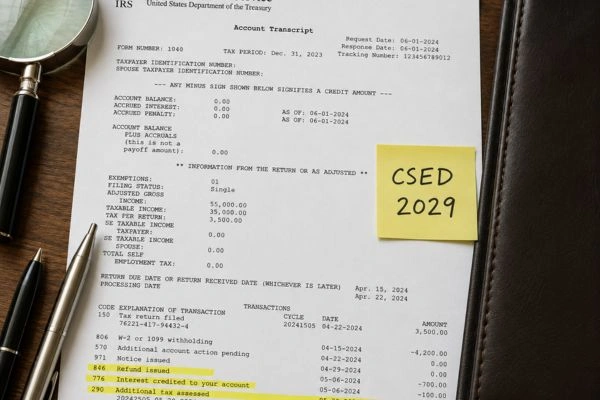
The 10-year tax debt rule comes from IRC §6502. The IRS has 10 years from the date a tax is assessed to collect that balance. The deadline is called the Collection Statute Expiration Date, or CSED. Once it passes, the IRS can’t levy your wages, freeze your bank account, or file new liens for that debt. Each tax year you owe has its own separate CSED.
What the 10-Year IRS Tax Debt Rule Actually Means
Your tax debt becomes legally uncollectible 10 years after the IRS assesses it, not 10 years after you filed the return. That distinction trips up almost everyone.
The assessment date is when the IRS formally records the balance against you. For a return filed on time, that’s usually a few weeks later. To an audit that adds tax, the assessment date is when the audit closes. For a Substitute for Return (SFR) the IRS prepared because you never filed, the SFR assessment starts your clock.
Never filed at all? No clock is running. The IRS can assess the liability whenever it gets around to it. Per the IRS Data Book, the agency collected $77.6 billion in unpaid taxes in FY2024, a 13.6% jump over the prior year. They’re not getting less aggressive.
Events That Pause or Extend the 10-Year Tax Debt Clock
Certain actions stop the CSED clock from running. When the pause ends, that time gets added back to the end of your 10 years. This is where most CSED estimates fall apart.
| Event | Effect on Your CSED |
| Bankruptcy filing | Suspended during case, plus 6 months after |
| Offer in Compromise pending | Suspended during review, plus 30 days |
| Installment Agreement request | Suspended during review |
| Collection Due Process hearing | Suspended during appeal |
| Living abroad 6 months or more | Suspended until return |
| Combat zone service | Suspended during deployment |
| Signed Form 900 waiver | Extended by agreed time |
Does Bankruptcy Pause the Clock?
Yes. The entire bankruptcy case suspends the CSED, plus 6 months after closing. Some older income tax debts may also be dischargeable, but that’s a separate question from CSED tolling.

How Does an Offer in Compromise Affect Your CSED?
Filing pauses the clock during review, plus 30 days. If your OIC sits for 14 months and gets rejected, you just added more than a year to your CSED. We’ve seen weak OICs burn 18 months of statute on cases that never had a real chance. Don’t file an OIC unless the math actually supports acceptance.
Installment Agreement Requests
Pending while under review. Once approved, the clock runs again. The agreement doesn’t change your CSED. It just structures the payment.
Collection Due Process Hearings
A CDP appeal stops most collection action and tolls the CSED for the duration. CDP hearings are powerful tools for halting levies, but they extend your statute too. Use them on purpose.
Living Abroad or Serving in a Combat Zone
Six continuous months outside the U.S. pauses the clock until you return. Active duty combat zone service tolls collection too. These rules exist because the IRS can’t realistically collect from people it can’t reach.
Real CSED Walk-Throughs
Example 1, Clean Assessment with No Tolling
You filed your 2018 return on time. The IRS assessed it on August 1, 2019. No bankruptcy, no OIC, no appeals. Your CSED is August 1, 2029. After that date, the balance is uncollectible.
Example 2, OIC Review Adds Nine Months
Same facts as Example 1, but you filed an OIC in February 2024. The IRS reviewed for 8 months and rejected it in October 2024. The clock paused for those 8 months plus 30 days. Your new CSED moves from August 1, 2029 to around June 2030. Nine months of “wait it out” strategy, gone.

How Do You Find Your CSED in 2026?
Pull an IRS account transcript for each year you owe. CSED entries appear by tax period. The IRS doesn’t send a notice when your statute expires. You verify it yourself or have someone do it for you.
- Log into your IRS Online Account and download account transcripts for each year you owe.
- If online access isn’t available, submit Form 4506-T by mail or fax.
- Have your tax representative call the IRS Practitioner Priority Service line.
- Check each transcript for the CSED entry, then layer in any tolling events.
- Cross-check against your own records of bankruptcies, OICs, appeals, or extended time abroad.
If you have years of unfiled returns, the CSED conversation starts with getting those returns prepared and filed. The IRS has to assess a balance before any clock runs on it.
Five Myths About the 10-Year Tax Debt Rule
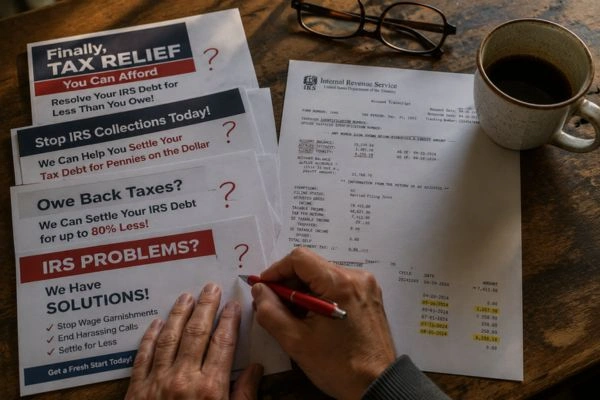
Most of what people believe about the 10-year rule is wrong. The tax relief industry runs on aggressive advertising, and a polished campaign doesn’t mean accurate information. Look at the credentials of who would actually handle your case, not what their marketing team put together.
Myth: All Tax Debt Disappears at Exactly 10 Years
Wrong. The 10-year clock pauses for tolling events. We’ve seen real cases where the actual CSED was 13, 14, even 16 years out from the original assessment.
Myth: A Payment Plan Speeds Up the Clock
Wrong. Requesting an installment agreement pauses the clock during review. Once approved, the agreement doesn’t move the CSED. Your payments reduce the balance, not the statute.
Myth: Bankruptcy Wipes Out All IRS Tax Debt
Sometimes. Income tax debt that’s at least three years old, where the return was filed on time and wasn’t fraudulent, may be dischargeable. Most penalty debt and trust fund taxes aren’t. And the CSED is paused during the case plus 6 months after.
Myth: You Can’t Settle If You Can’t Pay
Wrong. A Partial Pay Installment Agreement lets you pay what you can afford each month. Anything still owed when the CSED hits is wiped. PPIAs are underused because they require careful financial documentation, but they work for people who can’t qualify for an OIC.
Myth: The IRS Tells You When Tax Debt Expires
Wrong. The IRS doesn’t send you a “your debt expired” letter. You verify it yourself and request a Certificate of Release of Federal Tax Lien from every county where a lien was filed.
What If Your Tax Debt Is Still Years From Expiration?
Waiting it out only works if you can survive a decade of potential IRS enforcement without losing your home, business, or wages. For most people, that’s not realistic. Better options exist.
Currently Non-Collectible Status
If your income barely covers basic IRS-allowed expenses, you may qualify for currently non-collectible status. Garnishments and levies stop. The CSED clock keeps running. Stay in CNC long enough, and your statute can expire while the IRS is required to leave you alone.
Offer in Compromise
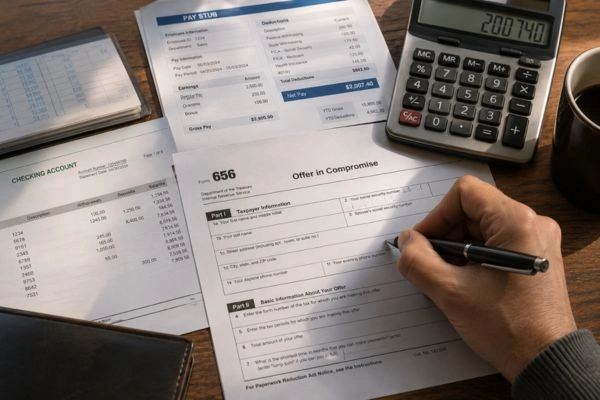
Settling for less than you owe is possible when your Reasonable Collection Potential genuinely shows you can’t pay the full balance. The IRS accepts roughly 21% of OIC applications. Most rejections happen because applicants don’t meet the basic qualifications.
Installment Agreement
The IRS offers streamlined plans for balances under $50,000 over 72 months, and a test program up to $100,000 over 84 months. Beyond that, the agreement is based on your verified ability to pay. There are several installment agreement options depending on your balance and income.
Penalty Abatement
First-time abatement removes failure-to-file and failure-to-pay penalties for taxpayers with a clean three-year compliance record. Reasonable-cause abatement applies when illness, disaster, or other hardship caused the late payment. Interest tied to abated penalties can come off too.

Bankruptcy
For income tax debt that meets strict timing rules, bankruptcy may discharge balances. We only look at this option for specific cases where the math clears the debt. The CSED is paused during the case plus 6 months either way.
Tax debt is one of the few financial problems that gets worse the longer you ignore it. Penalties stack. Interest compounds. The IRS gets more aggressive in the final years of the statute, not less. If your CSED is within two or three years and you have no resolution in place, doing nothing is no longer a strategy. The 10-year rule on tax debt is real. It’s just rarely the answer people are hoping for.
Frequently Asked Questions
Does IRS tax debt automatically disappear after 10 years?
Only if the 10-year clock was never paused or extended. Tolling events like bankruptcy filings, Offers in Compromise, installment agreement requests, Collection Due Process hearings, and extended time abroad all suspend the CSED. Many taxpayers assume their tax debt has expired when it actually has years left. Verify with IRS transcripts, not assumptions.
How do I find my actual CSED date?
Pull an IRS account transcript for each tax year you owe. The CSED date appears alongside each tax period. You can access transcripts through your IRS Online Account or by submitting Form 4506-T. If tolling events apply, the date on the transcript may not reflect every extension, so a tax professional should review for accuracy.
Can the IRS restart collections on tax debt after the CSED expires?
No. Once the CSED passes on a specific assessment, the IRS cannot legally collect that balance. Each tax year has its own CSED, though, so some balances may have expired while others are still active. The IRS also has up to 30 days after CSED to apply any payments already in transit.
What happens if I pay tax debt after the CSED expires?
You may be able to request a refund of overpayments, but only before the Refund Statute Expiration Date (RSED), which is typically two years from the date of payment. The IRS may also issue Letter 672C confirming the payment was received post-statute. Stop voluntary payments once you confirm a balance has expired.
Do state tax debts follow the same 10-year rule?
No, not always. Michigan has its own collection statute rules that may not mirror federal CSED timing. Some states have shorter collection windows, others longer. If you owe both federal and state taxes, treat each clock separately and verify state rules with your state’s department of treasury or a Michigan tax professional.
Will the IRS get more aggressive as my CSED approaches?
Yes. Revenue officers commonly increase enforcement in the final two to three years of the statute. Wage garnishments, bank levies, and lien filings all get more likely. If your CSED is within three years and no resolution is in place, the next 36 months are usually the hardest, not the easiest.

Bridgette Austin, Esq., EA, spent three years at Michigan State University’s Tax Clinic representing low-income taxpayers before the IRS – two as a student clinician, one as a post-graduate fellow. That work shaped her practice. A Bellaire, Michigan native with a Northern Michigan University bachelor’s and an MSU law degree, she now resolves IRS and State of Michigan tax debt cases at Austin & Larson.
Recent Comments