

Written By: Michael Vale
Reviewed By: Bridgette Austin, Esq., EA, Co-Founder and Tax Attorney
Last Reviewed: June 1, 2026
Most bank accounts aren’t safe from the IRS. If you owe back taxes and collection notices have gone unanswered, the IRS can freeze and seize funds from nearly any account in your name. Checking, savings, money market, business accounts. All fair game.
But certain funds are protected, even after they land in your bank account. The distinction isn’t about the account type. It’s about what’s inside it.
Under IRC Section 6334, specific categories of income are exempt from IRS levy, including Social Security disability payments (SSI), unemployment benefits, workers’ compensation, and certain public assistance. These protections follow the funds into your bank account as long as they can be traced. That single legal rule is the answer most people searching this topic actually need.
This article won’t cover wage garnishment exemptions or installment agreements in depth. If you’re looking for help with resolving back taxes through payment plans, that’s a separate path. What follows is specifically about which bank account funds the IRS can and can’t seize.
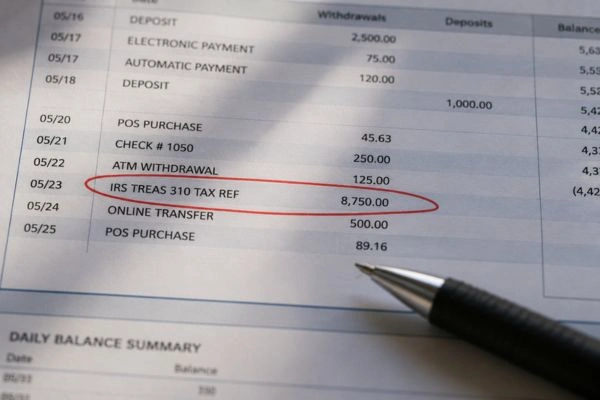
Which Accounts Can the IRS Actually Seize?
The short answer: almost all of them.
When the IRS issues a bank levy, it applies to every dollar in accounts where you have withdrawal rights. That includes individual checking and savings accounts, business accounts tied to your name or Social Security number, and institutional accounts. If your name is on it and you can pull money out, the IRS can too.
I’ve seen people assume their business account is separate from their personal tax debt. That’s only true if the business is a properly structured entity like a corporation or LLC with its own EIN. Sole proprietors? The IRS treats your business account the same as your personal one. We’ve worked with small business owners who lost operating capital overnight because they didn’t understand this.
The IRS doesn’t need a court order to issue a levy. They need a Final Notice of Intent to Levy (typically CP 90 or LT11), 30 days for you to respond, and your silence. That’s it. IRS Publication 594 lays out the full collection process, and it moves faster than most people expect.

What Happens When the IRS Levies Your Bank Account?
Your bank gets the levy notice first. Then your funds freeze.
But here’s what most articles skip: the bank doesn’t send your money to the IRS immediately. Under IRC Section 6332(c), the bank holds levied funds for 21 days before turning them over. That 21-day window exists specifically so you can take action, whether that’s disputing the levy, proving the funds are exempt, or working out a resolution with the IRS.
I can’t overstate how many people don’t know about this window. They see a frozen account, panic, and assume the money is gone. It isn’t. Not yet. Those 21 days are the most important deadline in the entire levy process, and waiting even a few days to respond shrinks your options fast.
One more detail the original article missed: a bank levy only grabs funds present at the moment the bank receives the notice. New deposits after that point aren’t affected unless the IRS sends a second levy. It’s a snapshot, not a continuous drain.

What Types of Bank Accounts Are Protected From IRS Levies?
No bank account is truly “IRS-proof.” The protection applies to specific types of funds, not the account holding them.
Under IRC Section 6334, these income types are exempt from levy:
- Supplemental Security Income (SSI) under Title XVI of the Social Security Act
- Unemployment benefits
- Workers’ compensation payments
- Certain public assistance and welfare payments
- Child support payments
- Railroad Retirement Act annuities and pensions
- Minimum exempt amounts from wages and salary (updated annually in IRS Publication 1494)
For 2026, the weekly exempt amount on wage levies starts at roughly $309.62 for a single filer with no dependents, and increases with dependents. Those figures come from Publication 1494, revised December 2025.
Federal law also requires banks to protect two months’ worth of certain federal benefit deposits (like Social Security and Veterans Affairs payments) from garnishment. That protection is automatic. The bank is supposed to identify those deposits and exclude them from the levy hold.
“Supposed to” is doing some heavy lifting in that sentence. I’ve seen cases where banks froze the entire balance and the client had to prove which funds were exempt during the 21-day window. Don’t assume the bank will sort this out for you.
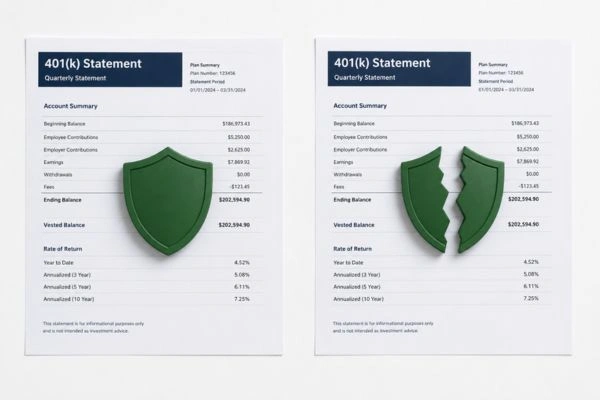
Are Retirement Accounts Really Safe From the IRS?
This is the biggest myth in the IRS levy space. And repeating it uncritically (like the original version of this article did) can mislead people into a false sense of security.
Retirement accounts like 401(k)s, IRAs, and SEP-IRAs are NOT statutorily exempt under IRC Section 6334. The IRS has the legal authority to levy them.
What protects most retirement accounts is IRS internal policy, not federal law. The Internal Revenue Manual (IRM 5.11.6.3, updated March 2024) directs agents to avoid levying retirement accounts unless the taxpayer has engaged in “flagrant conduct.” The National Taxpayer Advocate has pushed for years to make this a statutory protection. Their 2024 Purple Book report to Congress specifically recommended amending IRC Section 6334 to formally exempt retirement funds absent flagrant behavior.
That recommendation hasn’t become law as of 2026. So yes, your 401(k) is probably safe in practice. But it’s protected by a policy guideline, not a statute. Policies change. If you owe a large balance and the IRS suspects evasion, retirement accounts are on the table.
The Commingling Problem With Exempt Funds
This is where people get into real trouble. You receive SSI or unemployment benefits (exempt). You deposit them into your regular checking account alongside your paycheck and freelance income (not exempt). The IRS levies the account.
Now you have to prove which dollars came from exempt sources. That’s the commingling problem, and it trips up more people than any other issue I see in levy cases.
If your exempt benefits are mixed with non-exempt income, the burden falls on you to trace those funds. Bank statements showing direct deposit sources help. But if you’ve been moving money between accounts or spending down and rebuilding, tracing becomes much harder.
The cleanest protection is keeping exempt income in a dedicated account with no other deposits. That makes tracing simple and gives you a clear argument during the 21-day hold period.

Can the IRS Levy a Joint Bank Account?
Yes. If you have withdrawal rights on a joint account, the IRS can freeze and levy the entire balance.
The Supreme Court settled this in United States v. National Bank of Commerce. The IRS doesn’t have to determine whose money is whose before levying. They take it all, and then the non-liable account holder (typically a spouse) has to file a claim to recover their portion.
That claim requires documentation proving the non-liable party’s contributions to the account: pay stubs, deposit records, separate income verification. It’s recoverable, but it’s a burden that falls on the innocent party, and it happens during an already stressful 21-day window.
I’ve worked with couples where one spouse’s tax debt originated years before the marriage. The other spouse had no idea the IRS could touch their joint savings. Separating finances when one partner has unresolved tax issues isn’t paranoia. It’s planning.

How to Get an IRS Bank Levy Released
Acting during the 21-day hold period gives you the best chance. Once the bank sends the money, recovering it gets significantly harder.
- Contact the IRS immediately. Call the number on your levy notice and request a levy release. If you can show that the levy is creating an economic hardship (you can’t cover basic living expenses like rent, utilities, or food), the IRS may release it.
- Request a Collection Due Process (CDP) hearing. If you received a Final Notice (CP 90 or LT11) and haven’t already used your hearing rights, file Form 12153 within 30 days. This puts a hold on collection while your case is reviewed.
- Set up a resolution. An installment agreement, Offer in Compromise, or Currently Not Collectible status can all lead to a levy release. The IRS will typically release a levy once an alternative arrangement is in place.
- Prove the funds are exempt. If the levied account contains protected income (SSI, unemployment, veterans’ benefits), provide bank statements and deposit records to the IRS showing the source of those funds.
Don’t ignore a levy hoping it goes away. Every day you wait inside that 21-day window is a day you can’t get back.

Protecting Your Accounts Before a Levy Hits
The IRS doesn’t levy without warning. You’ll receive multiple notices before a Final Notice of Intent to Levy arrives. Responding early, at the first CP501 or CP504 notice, gives you far more options than waiting until your account is frozen.
If you’re dealing with IRS collection issues, keep exempt income in a separate account, respond to every notice in writing, and get professional help before the Final Notice stage.
And a word on offshore accounts: moving money overseas to avoid a levy is not a protection strategy. FBAR and FATCA reporting requirements mean the IRS knows about foreign accounts holding over $10,000 in aggregate. Failing to report them triggers penalties that often exceed the original tax debt. I’ve watched people turn a manageable tax balance into a six-figure compliance nightmare by trying this.
The people who protect their accounts successfully aren’t the ones looking for loopholes. They’re the ones who respond to notices early, understand which funds are exempt, and work with a qualified tax resolution team before the levy clock starts ticking.
Frequently Asked Questions
Can the IRS take money from my bank account without notice?
No. The IRS must follow a multi-step notice process before issuing a bank levy. You’ll receive a tax bill, follow-up notices, and a Final Notice of Intent to Levy (CP 90 or LT11) with 30 days to respond. The only exceptions involve cases where the IRS believes collection is in jeopardy.
How long does the IRS hold my money during a bank levy?
Your bank freezes the levied funds for 21 days under IRC Section 6332(c) before sending them to the IRS. That 21-day window is your chance to dispute the levy, prove funds are exempt, or set up a resolution with the IRS.
Are retirement accounts like 401(k)s and IRAs safe from IRS levies?
Not by law. Retirement accounts aren’t listed as exempt under IRC Section 6334. IRS internal policy (IRM 5.11.6.3) directs agents to avoid levying retirement funds unless the taxpayer engaged in flagrant conduct. The National Taxpayer Advocate’s 2024 Purple Book recommended making this protection statutory, but that hasn’t happened yet.
Can the IRS levy a joint bank account if only one spouse owes taxes?
Yes. The IRS can freeze and seize the full balance of any joint account where the liable taxpayer has withdrawal rights. The non-liable spouse must file a separate claim with documentation proving their contributions to recover their share.
What income is exempt from IRS bank levies?
Under IRC Section 6334, exempt income includes SSI, unemployment benefits, workers’ compensation, child support, certain public assistance, and Railroad Retirement Act payments. Banks must also protect two months of federal benefit direct deposits from levy. For wages, the 2026 weekly exempt amount starts at approximately $309.62 for single filers with no dependents.
Will moving money to an offshore account protect it from the IRS?
No, and attempting this can make your situation significantly worse. FBAR requires reporting foreign accounts exceeding $10,000 in aggregate value. FATCA requires foreign banks to report U.S. account holders directly to the IRS. Penalties for noncompliance frequently exceed the original tax debt.
What should I do if the IRS already levied my bank account?
Act within the 21-day hold period. Contact the IRS to request a levy release based on economic hardship, prove that levied funds contain exempt income, or establish a payment arrangement. Once the 21 days expire and the bank sends the funds, recovery options narrow significantly.

Bridgette Austin, Esq., EA, spent three years at Michigan State University’s Tax Clinic representing low-income taxpayers before the IRS – two as a student clinician, one as a post-graduate fellow. That work shaped her practice. A Bellaire, Michigan native with a Northern Michigan University bachelor’s and an MSU law degree, she now resolves IRS and State of Michigan tax debt cases at Austin & Larson.
Recent Comments