

Written By: Michael Vale
Reviewed By: Bridgette Austin, Esq., EA, Co-Founder and Tax Attorney
Last Reviewed: May 25, 2026
Filing bankruptcy can stop IRS levies immediately. The moment a petition hits the court, a federal protection called the automatic stay freezes all IRS collection activity, including wage garnishments, bank seizures, and property levies. I’ve watched clients go from a frozen bank account on Monday to full access by Friday after their case was filed.
But bankruptcy isn’t a magic eraser for all tax debt. Some balances qualify for complete discharge. Others don’t. The difference comes down to timing, the type of tax, and which chapter you file. Most people don’t understand these distinctions until it’s too late, and that gap between what they assume and what the law actually says is where serious mistakes happen.
Bankruptcy is a court-supervised legal process that can halt IRS levies, discharge qualifying income tax debt, and give individuals a structured path to resolve balances they can’t pay in full. That single sentence is what the IRS and bankruptcy courts care about. Everything else is detail.
This article won’t cover Offers in Compromise or IRS installment agreements. Those are separate tools with their own qualification rules. If you’re looking at settling tax debt outside of bankruptcy, that’s a different conversation. What follows is specifically about using bankruptcy to stop an active or threatened levy.
What Is an IRS Levy?
An IRS levy is a legal seizure. Not a threat, not a lien, not a letter. It’s the IRS physically taking your property, your wages, or your bank balance to cover unpaid taxes.
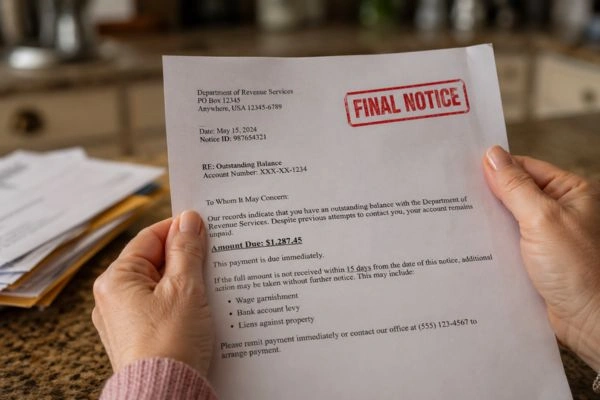
People confuse levies with federal tax liens all the time. A lien is a claim against your property. A levy is the IRS actually taking it. By the time a levy hits, you’ve already received a Final Notice of Intent to Levy, and you had 30 days to respond. If that window closed without action, the IRS moves forward.
According to IRS guidance updated in March 2026, the agency treats bankruptcy as a qualifying event that suspends collection. But you have to file first. The protection doesn’t kick in retroactively.
How the Automatic Stay Stops IRS Collections
Under 11 U.S.C. § 362, filing a bankruptcy petition triggers the automatic stay. It’s not optional for creditors, and yes, that includes the IRS. Every garnishment, every bank levy, every seizure attempt has to stop.
The U.S. Courts reported roughly 591,850 bankruptcy filings for the 12-month period ending March 2026, up 11.9% from the prior year (U.S. Courts bankruptcy data). That spike tells you something. More people are using this tool because it works.
I’ve seen the IRS test boundaries on this. They’ll sometimes issue a notice or continue an audit even after the stay is in place. The automatic stay doesn’t block audits or new assessments, only collection. IRS Publication 908 spells this out clearly. If your tax professional tells you bankruptcy stops everything the IRS does, they’re wrong. It stops collection. That’s the distinction that matters.
One thing most articles won’t tell you: the stay also suspends the IRS’s collection statute expiration date (CSED) for the entire time your case is open, plus six months. So while you’re protected from seizure, the clock on how long the IRS has to collect from you also pauses. That’s a trade-off most people don’t weigh before filing.

Can Bankruptcy Discharge Your Tax Debt?
Some tax debt, yes. All of it? No.
The discharge rules follow what practitioners call the “3-2-240” rule. Your tax return must have been due at least three years before you file bankruptcy. You must have actually filed that return at least two years prior. And the IRS must have assessed the tax at least 240 days before your filing date.
Miss any one of those windows and the debt survives bankruptcy. Payroll taxes, fraud penalties, and trust fund recovery penalties? Those never discharge. I’ve worked with business owners who assumed Chapter 7 would wipe their payroll tax liability clean. It doesn’t. Not under any circumstances.
You need your IRS account transcripts to verify these dates. Don’t guess. The difference between a dischargeable and non-dischargeable tax debt can come down to a single month on the calendar. If you have unfiled or delinquent tax returns, those returns typically don’t qualify for discharge at all. Filing them late doesn’t always fix the problem either.

Chapter 7 vs. Chapter 13 for Stopping IRS Levies in 2026
Both chapters trigger the automatic stay. Both stop levies. The difference is what happens after that.
| Chapter 7 | Chapter 13 | |
| Timeline | 3 to 6 months | 3 to 5 years |
| Tax debt treatment | Discharges qualifying old income taxes | Repays priority taxes in full through a plan; older debts may discharge at the end |
| Asset protection | Non-exempt assets may be liquidated | Keep assets while making plan payments |
| Levy protection | Immediate stay; ends at discharge or dismissal | Stay lasts the full plan duration |
| Best for | Low-asset filers with dischargeable tax debt | Higher-income filers or those with non-dischargeable balances |
Chapter 7 is faster. If your tax debt meets the 3-2-240 criteria and you don’t have significant assets at risk, it’s often the cleaner path. But Chapter 13 gives you something Chapter 7 can’t: time. A structured repayment plan over three to five years, with the IRS locked out of independent collection the entire time.
I’ll push back on a common piece of advice here. Many tax professionals default to recommending Chapter 13 for anyone with IRS problems. That’s not always right. If your debt qualifies for discharge, Chapter 7 can eliminate it in months instead of locking you into years of payments. The right chapter depends on the numbers, not a blanket rule.
What Happens to Tax Liens After You File?
Bankruptcy stops levies, but it doesn’t automatically remove existing tax liens. That’s the part nobody wants to hear.
If the IRS filed a federal tax lien before you filed bankruptcy, the lien survives. Your personal liability for the debt might be discharged, but the lien remains attached to your property. If you sell your home, you’ll have to pay off the lien from the proceeds.
In Chapter 13, there’s a workaround. Your attorney can ask the court to value the lien based on available equity. If your property doesn’t have enough equity to cover the full lien amount, the excess can be treated as unsecured debt and potentially discharged at the end of the plan. That’s a powerful tool for people trying to keep their home.

Recovering Money the IRS Already Seized
This surprises most people. If the IRS grabbed money from your bank account or paycheck shortly before you filed, you may be able to get it back.
The automatic stay doesn’t just stop future collection. If seized funds haven’t been applied to your account yet, the bankruptcy court can order the IRS to return them. Timing is everything. Waiting even a few extra days can mean the difference between recovering those funds and losing them permanently.
What to Do When the IRS Sends a Levy Notice
The Final Notice of Intent to Levy gives you 30 days. Don’t waste any of them.
- Pull your IRS account transcripts immediately. You need assessment dates, filing dates, and payment history to determine which debts might qualify for discharge.
- Gather every IRS notice you’ve received. Organize them by tax year.
- Talk to a qualified tax resolution professional before the 30-day window closes.
- Determine whether your tax debt meets the 3-2-240 criteria.
- File the bankruptcy petition before the levy executes.
- Notify the IRS with your case number and filing date once the petition is on record.
That sequence matters. Filing even one day after the IRS executes a levy changes your recovery options dramatically.

Protecting Your Wages and Bank Accounts
Wage garnishments and frozen bank accounts from back taxes are the most common reasons people consider bankruptcy for tax debt. The automatic stay addresses both.
If the IRS hasn’t seized the funds yet, the stay blocks it. If they’ve frozen your account but haven’t moved the money, a quick filing can release the hold. I’ve handled cases where a same-week filing reversed a bank freeze that would have left a family unable to pay rent.
The IRS doesn’t fight the automatic stay. They follow it. Once they receive notice of your bankruptcy case, the hold typically releases within days.
Staying Out of Trouble After Bankruptcy
Bankruptcy gives you a fresh start on qualifying tax debt. It doesn’t give you a pass on future obligations.
In Chapter 13, missing a single tax return filing can get your case dismissed. Dismissed means the automatic stay goes away and the IRS picks up right where they left off. With 574,314 bankruptcy cases filed in 2025 alone (according to U.S. Courts data), a meaningful percentage fail for exactly this reason.
Stay current on filings. Make estimated payments if you’re self-employed. Adjust your withholding if you owed last year. The worst outcome is going through the entire bankruptcy process and ending up right back where you started because of a missed return.
Working with an experienced team that understands tax resolution from the start makes the difference between a one-time fix and a recurring problem.
Frequently Asked Questions
Can bankruptcy stop an IRS levy that’s already been issued?
Yes. Filing a bankruptcy petition triggers the automatic stay under 11 U.S.C. § 362, which forces the IRS to halt all collection activity. If the IRS has frozen your bank account but hasn’t yet moved the funds, the stay can release the hold within days of filing.
Does bankruptcy wipe out all IRS tax debt?
No. Only qualifying income tax debt that meets the 3-2-240 rule can be discharged. The tax return must have been due at least three years ago, filed at least two years ago, and assessed at least 240 days before filing. Payroll taxes, fraud penalties, and trust fund taxes never qualify.
What’s the difference between an IRS levy and a tax lien?
A lien is a legal claim the IRS places on your property. A levy is the IRS actually seizing your wages, bank accounts, or physical assets to satisfy a tax debt. Bankruptcy can stop a levy immediately through the automatic stay, but existing liens typically survive the process.
Can I recover money the IRS already took from my bank account?
In many cases, yes. If the IRS seized funds shortly before you filed bankruptcy and those funds haven’t been applied to your account, the court may order the IRS to return them. Timing matters, and delays of even a few days can affect your recovery options.
Should I file Chapter 7 or Chapter 13 to stop IRS levies?
Both chapters trigger the automatic stay. Chapter 7 resolves faster (typically three to six months) and can discharge qualifying tax debt. Chapter 13 provides a three to five year repayment plan and keeps the IRS from collecting independently during that period. The right choice depends on your income, assets, and whether your tax debt qualifies for discharge.
Does the automatic stay stop IRS audits too?
No. The automatic stay only prevents collection actions like levies, garnishments, and seizures. The IRS can still audit you, issue deficiency notices, and assess new taxes during bankruptcy. IRS Publication 908 confirms this distinction.
What happens if I miss a tax filing during Chapter 13 bankruptcy?
Your case can be dismissed. If that happens, the automatic stay lifts and the IRS resumes collection right where they stopped. With 574,314 bankruptcy cases filed in 2025 (per U.S. Courts data), a significant number fail because filers didn’t keep up with ongoing tax obligations during the plan period.

Bridgette Austin, Esq., EA, spent three years at Michigan State University’s Tax Clinic representing low-income taxpayers before the IRS – two as a student clinician, one as a post-graduate fellow. That work shaped her practice. A Bellaire, Michigan native with a Northern Michigan University bachelor’s and an MSU law degree, she now resolves IRS and State of Michigan tax debt cases at Austin & Larson.
Recent Comments