

Written By: Michael Vale
Reviewed By: Bridgette Austin, Esq., EA, Co-Founder and Tax Attorney
Last Reviewed: May 10, 2026
The IRS rejected roughly 79% of offer in compromise applications in FY 2024, accepting just 7,199 out of 33,591 submissions according to IRS collections data. Most of those rejections were preventable. Taxpayers blow their OIC by making the same mistakes over and over: filing incomplete paperwork, lowballing the offer amount, or piling on new tax debt while they wait.
An offer in compromise is a formal agreement with the IRS to settle your tax debt for less than the full balance owed. It’s governed by IRC §7122 and requires you to prove that paying in full would create financial hardship, or that the IRS likely can’t collect the full amount before the statute expires. The average accepted offer in FY 2024 came in around $22,700 per IRS Table 27 data.
This article covers the 10 biggest mistakes that kill OIC applications and what to do instead. It won’t cover Currently Not Collectible status or penalty abatement in depth. Those are separate topics.

1. Are You Stacking New Tax Debt While Waiting on Your Offer?
This is the fastest way to tank an offer in compromise. The IRS calls it “pyramiding,” and it tells them you’re not serious about getting current.
A typical OIC takes 6-24 months to process. If you skip quarterly estimated payments or miss a filing deadline during that window, the examiner has grounds to reject your application outright. I’ve seen clients wait 11 months for their offer to reach the front of the line, only to get a denial letter because they missed one estimated payment in Q3.
The fix is boring but non-negotiable: stay current on all filings and payments while your offer is pending. Set calendar reminders for every quarterly due date. If you’re self-employed and you’re not already making estimated payments, your offer is in trouble before it starts.
2. What Happens If You Miss a Filing After Your OIC Gets Accepted?
The IRS doesn’t just forgive your debt and walk away. Every accepted offer in compromise comes with a 5-year compliance covenant. You must file and pay all taxes on time for 5 years following acceptance. Miss one return in year 4, and the IRS reinstates the entire original balance, plus penalties and interest.
This isn’t hypothetical. It’s one of the most common ways taxpayers lose an offer they already won. The IRS also keeps your tax refunds during the review period, which catches people off guard.
Think of it this way: if the IRS forgave $60,000 of your $80,000 debt through an OIC and you miss a filing in year 3, that $60,000 comes back. With interest. Having a dedicated tax resolution team keeping you on track during that 5-year window is the difference between keeping your settlement and losing it.

3. Why Should You Appeal an Offer in Compromise Denial?
Most taxpayers don’t know they can appeal. Fewer know how.
When the IRS rejects your offer, you have 30 days to file an appeal through the Collection Appeals Program. A different IRS employee reviews your case from scratch. That’s a fresh set of eyes on every number in your application.
Only about 21% of offers got accepted in FY 2024, down from approximately 42% the year before. Even major CPA associations have called for OIC reforms because of drops like this. I think part of that decline comes from taxpayers who had legitimate offers but didn’t appeal the initial denial. A qualified tax attorney who handles IRS negotiations daily should have an acceptance rate well above the national average. If a professional you’re considering can’t tell you their success rate, that’s a red flag.
4. Should You Withdraw Your OIC Just Because the Examiner Suggested It?
No. This happens more than you’d expect.
Offer examiners are required to explore installment agreements as an alternative when they’re leaning toward a denial. That’s IRS protocol, not a judgment on your case. Some examiners push taxpayers toward payment plans from the start because it’s easier for the government.
If you have a strong offer backed by solid documentation, don’t fold because someone at the IRS suggested a payment plan. A payment plan might work for some people. But if your RCP (Reasonable Collection Potential) calculation supports a lower settlement, the offer is the better path.
5. Does the IRS Accept Low Offers Without Documentation?
No. And submitting one costs you money you won’t get back.
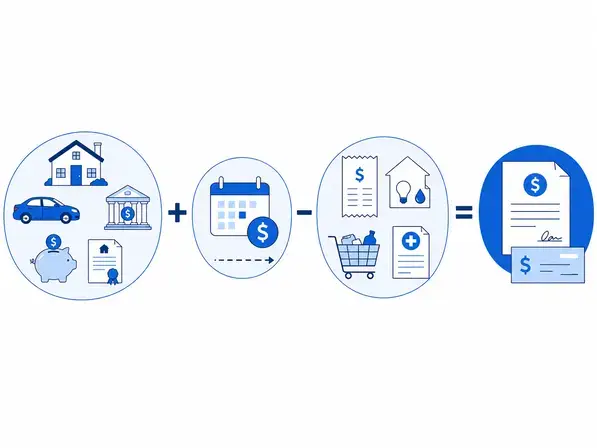
Your offer amount isn’t a negotiation opening bid. It’s a math problem. The IRS calculates your Reasonable Collection Potential (your assets plus future disposable income over 12 or 24 months, minus allowable expenses per national and local standards). Your offer has to meet or beat that number.
Submitting a “junk offer” with no supporting financials means you lose the $205 non-refundable application fee plus 20% of whatever you offered as an initial payment. Low-income taxpayers (household income at or below 250% of federal poverty guidelines, or $39,900 for an individual in 2026 per the April 2026 Form 656-B revision) can get both fees waived. If you later submit a legitimate offer, you pay all those fees again from scratch.
6. Is an Offer in Compromise Your Only Option for Tax Debt Relief?
No, and treating it like the only option is a mistake.
If your offer is looking weak (too much home equity, too many liquid assets), a Partial Pay Installment Agreement (PPIA) might accomplish almost the same thing. With a PPIA, if the amount you can pay over the collection statute of limitations is less than what you owe, the IRS absorbs the rest. The IRS also offers hardship programs like Currently Not Collectible status for people who can’t pay anything right now.
One thing most people miss: the collection statute of limitations stops running while your OIC is pending. If your statute is close to expiring, filing an offer that’s going to be denied might actually extend how long the IRS can collect from you. That’s the opposite of what you want.

7. When Is the Best Time to Submit an Offer in Compromise?
Here’s the contrarian point nobody wants to hear: the best time to settle isn’t when things are going well financially. It’s when they’re at their worst.
The IRS’ current OIC formula looks at either 12 months of disposable income (if you can pay in 5 months or less) or 24 months (if you need 6-24 months to pay). If that look-ahead period projects bleak finances and the projected total still won’t cover your full debt, you’ve got a real shot at approval.
The 2026 National Taxpayer Advocate’s Purple Book (released January 2026) actually recommended eliminating upfront OIC payment requirements because current fees create barriers for cash-strapped taxpayers. That recommendation hasn’t become policy yet, but it signals the program is too restrictive even by the IRS’ own assessment. These rules could change. I’ve seen IRS procedures shift with little warning.
8. Can You Handle an Offer in Compromise Without Professional Help?
You can try. But the numbers argue against it.
The IRS’ overall acceptance rate was 21.4% in FY 2024 across 33,591 applications. Among professionally prepared offers, practitioners report significantly higher success rates. The examiner’s job is to look out for the government’s interests. They’ll push you to sell property, cash out retirement accounts, or set up a payment plan. A tax attorney who handles these cases daily isn’t intimidated by those tactics.
Professional representation isn’t cheap, and fees vary widely based on the size of your debt and the complexity of your case. But if you owe $80,000 and a pro gets your offer accepted at $22,000, the math speaks for itself. The April 2026 Form 656-B now explicitly requires disclosure of digital assets like cryptocurrency and NFTs in your financial statements. Missing those is a guaranteed rejection, and it’s a detail most DIY filers don’t catch.

DIY vs. Professional OIC Comparison
| Factor | DIY | Professional Help |
| IRS Fees | $205 + 20% down (waived if low-income) | Same IRS fees apply |
| Professional Fees | $0 | Varies by debt size and case complexity |
| Prep Time | Weeks to months; high error risk | Faster prep; accurate RCP calculations |
| Rejection Rate | Extremely high (most due to form errors) | Significantly better odds |
| Post-Acceptance | You manage 5-year covenant alone | Ongoing guidance reduces default risk |
9. What Is a Collateral Agreement, and Should You Agree to One?
A collateral agreement is a side deal with the IRS that most taxpayers have never heard of. Here’s how it works: the examiner projects you’ll earn more next year than you currently do. They use that projection to justify a higher offer amount, which kills your deal.
A collateral agreement says, “If I earn above X amount, I’ll pay the IRS a percentage of the excess.” For example, if you made $35,000 last year, you might agree to pay $1 for every $5 earned above that threshold. You can also agree to forgo certain business deductions for a year.
The IRS may still reject the offer even with a collateral agreement attached. But it can pull unrealistic income projections back to reality. It shows the examiner you’re willing to share risk. This is a tool, not something to fear, but don’t agree to terms without professional guidance on the specifics.

10. Does Your Attitude Toward the Examiner Actually Matter?
More than most taxpayers realize.
Offer examiners are trained tax professionals. They have discretion on close calls, extensions for documentation, and creative solutions within the rules. If you lose your temper or treat them dismissively, that flexibility disappears.
This doesn’t mean you should be a pushover. Stand your ground on the numbers. But do it politely and professionally. The taxpayers who get the best outcomes are the ones who are firm on substance and respectful in delivery. If you feel yourself getting frustrated (and many people do when thousands of dollars are on the line), having experienced tax resolution representation handle communication is one of the least-discussed benefits of working with a pro.
One Mistake to Fix Before Everything Else
If you take one thing from this article, make it this: don’t submit an offer in compromise without understanding your Reasonable Collection Potential. That single number determines whether your offer gets accepted or rejected. Every other mistake on this list flows from not knowing your RCP.
The IRS accepted $163.4 million in OIC settlements in FY 2024. People are getting these approved, but only when the math is right and the paperwork is clean. The taxpayers who succeed are the ones who treat the process like a financial case, not a negotiation. Having a team that knows how to build that case around your specific situation changes the outcome.
FAQs
Why was my offer in compromise rejected even though I can’t afford to pay?
Most rejections stem from your offer amount falling below the IRS’ calculated Reasonable Collection Potential, not from inability to pay. In FY 2024, the IRS rejected about 79% of applications. The IRS uses its own formula (assets plus future income minus allowable expenses per national and local standards) and will deny any offer that doesn’t meet that number, regardless of what you say you can afford.
Do I lose the $205 application fee if my offer in compromise is rejected?
Yes. The $205 application fee and the 20% initial payment are both non-refundable and get applied to your existing tax balance. Low-income taxpayers (household income at or below 250% of the federal poverty guidelines, which is $39,900 for an individual in 2026 per the April 2026 Form 656-B) are exempt from both requirements.
How long does the IRS take to decide on an offer in compromise?
Most OIC applications take 6-24 months for a decision. There’s no fixed timeline, but if the IRS doesn’t make a determination within 2 years of receiving your offer (excluding appeal periods), the offer is automatically accepted. During the review period, the IRS retains any tax refunds you’re owed.
Can I file an offer in compromise while in bankruptcy?
No. An open bankruptcy case is an automatic return reason, meaning the IRS won’t even evaluate your offer. You must wait until your bankruptcy case is discharged or closed before submitting an OIC. There’s no appeal for this specific rejection reason.
What happens to my offer in compromise if I miss one tax return after acceptance?
The 5-year compliance covenant attached to every accepted OIC is strict. Missing even one tax return or payment defaults the entire agreement. The IRS reinstates your full original balance (including all forgiven amounts), adds back penalties and interest, and resumes collection activity. On a $80,000 debt settled for $20,000, that’s a $60,000-plus reversal.
Does the IRS count my home equity and retirement accounts in an offer in compromise?
Yes. Home equity, vehicle equity, and certain retirement account balances all factor into your Reasonable Collection Potential calculation. The IRS also requires disclosure of digital assets (cryptocurrency, NFTs, stablecoins) as of the April 2026 Form 656-B revision. Undisclosed assets lead to automatic rejection and potential fraud flags.
Is an offer in compromise better than Currently Not Collectible status?
It depends on your situation. Currently Not Collectible (CNC) status has no application fee and halts IRS collections during financial hardship, but it doesn’t settle your debt. Interest and penalties keep accruing. An offer in compromise settles your debt permanently for a reduced amount but requires upfront fees ($205 plus 20% down) and the 5-year compliance covenant. CNC is often better if your collection statute is close to expiring.

Bridgette Austin, Esq., EA, spent three years at Michigan State University’s Tax Clinic representing low-income taxpayers before the IRS – two as a student clinician, one as a post-graduate fellow. That work shaped her practice. A Bellaire, Michigan native with a Northern Michigan University bachelor’s and an MSU law degree, she now resolves IRS and State of Michigan tax debt cases at Austin & Larson.
Recent Comments